
Note: Free Venice Audio Guide. Dear visitor, on this page you can listen to the complete Florence audio guide for free. No payment is required. Enjoy! If you notice any mistake or wish to make any historical or cultural contribution to the content of the audioguide, please send us an email. Thank you.
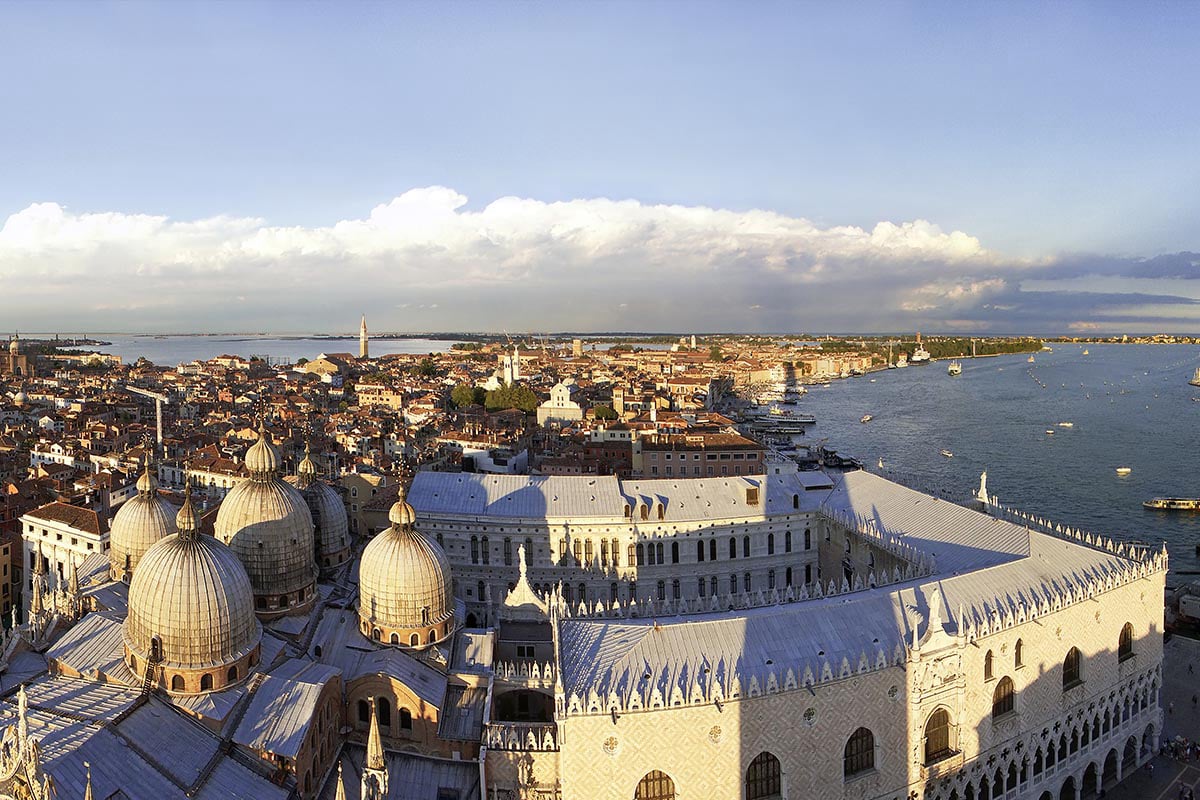
INTRODUCTION
Welcome to Venice! With this audio guide we will discover the main points of interest you simply cannot miss. This is a city structured around 150 canals, crossed by 400 bridges, where hundreds of palaces and dozens of museums rise, and which once had more than two hundred churches, of which approximately half remain today.
Venice is the capital of the Italian region of Veneto, which is made up of about 120 islands. In the mid-fifth century, the attacks of Attila and his invading troops forced the Veneti to take refuge on the small islets rising above the marshy ground of the lagoon.
The first settlements soon began to appear. To build them, land was reclaimed from the sea by creating artificial islands on which houses were constructed, supported by wooden piles. Between the late seventh century and the early eighth century, a member of the local population assumed the title of Magister Militum, an office that preceded the figure of the Doge. With this step, Venice laid the foundations for what would become a powerful republic. The Doge, or dogo in the Venetian dialect, established his residence in Rialto. At that time, this main centre of population was known as Rivo Alto, a name it would retain until well into the tenth century.
The most prosperous period of the Republic of Venice then began, driven by commercial freedom and the growth of its maritime power. The Doge achieved full authority in relation to the Byzantine Empire; at the same time, St Mark’s Basilica was consecrated for the second time and the Arsenal was built.
The Serenissima, as the Republic of Venice was known, secured important strongholds in the East thanks to its participation in the Crusades. At the same time, it expanded its territory in mainland Italy, strengthening its political power.
In the second half of the fifteenth century its decline began, caused by the rise of the Turkish Empire and by Portugal and Spain entering the trade route to the Indies.
Venetians and their visitors must keep a daily eye on high-tide warnings, especially in the autumn and winter months. For a couple of hours each day, the water floods the streets by a few centimetres before gradually receding again.
When the water level exceeds 110 centimetres above the zero reference level measured at Punta della Salute, the phenomenon known as acqua alta is said to occur. This happens only rarely, since several conditions must coincide, such as the blowing of the sirocco wind and active currents in the Adriatic.
St Mark’s Square is usually the area most affected, as it lies at a lower level than the rest of the city, and the rising water in the canals can sometimes make it difficult for boats to pass beneath the bridges. To mitigate this natural phenomenon, Venice relies on the MOSE system, consisting of 78 hydraulic gates located at the inlets of the lagoon.
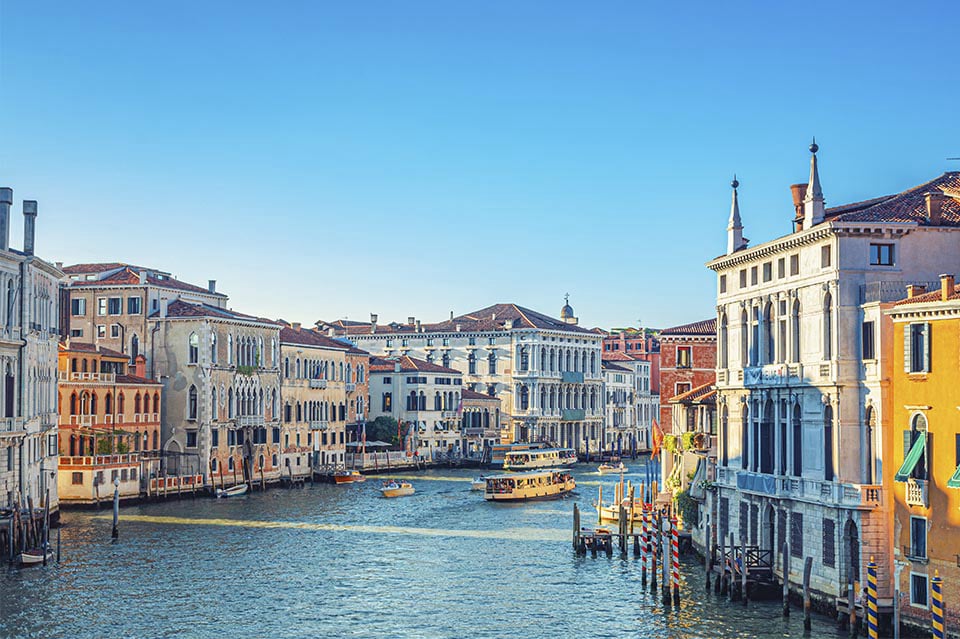
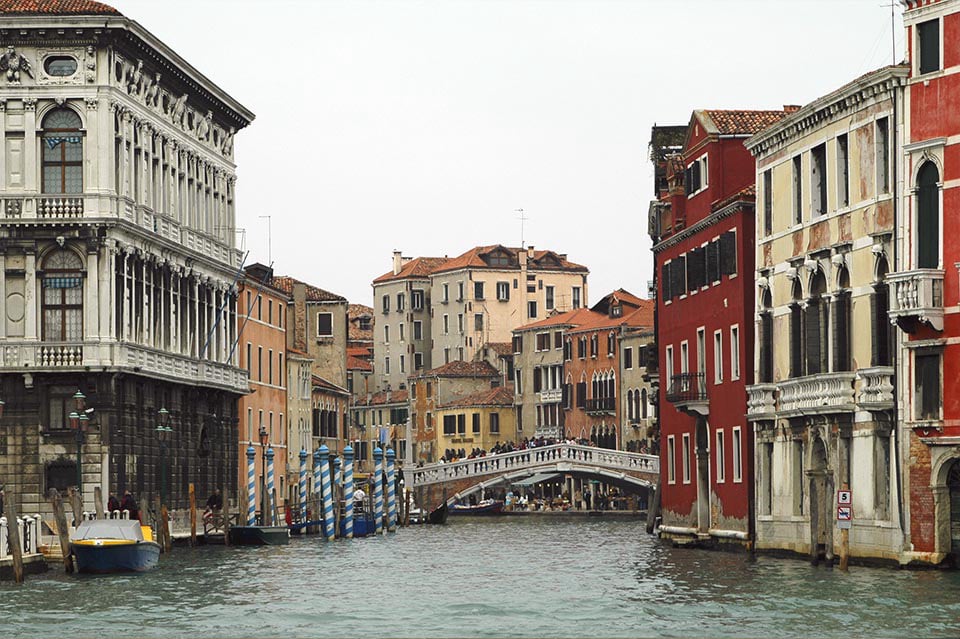
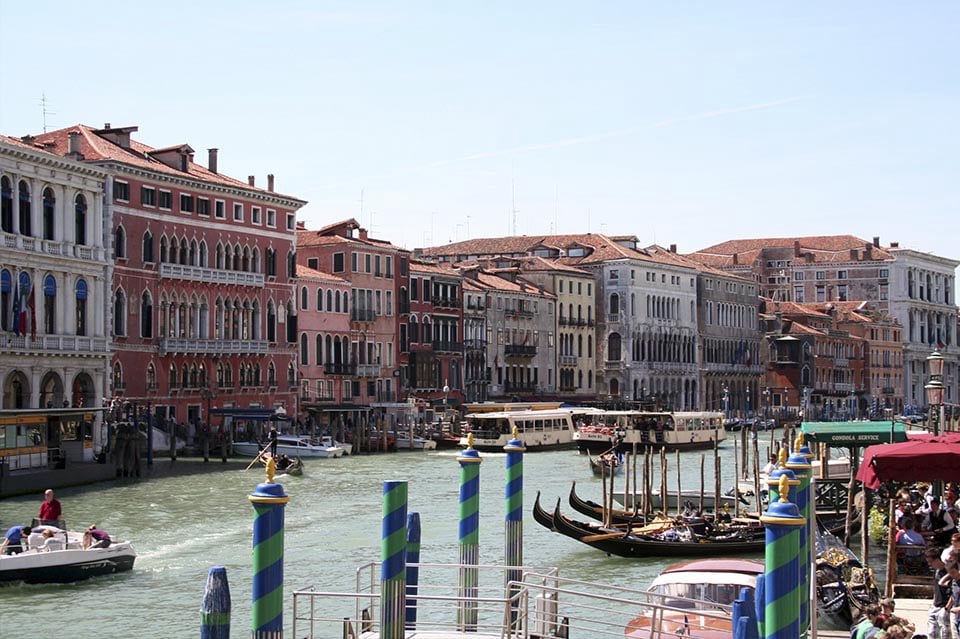
The Grand Canal, shaped like a reversed S, is the city’s main avenue. It is four kilometres long and between 30 and 70 metres wide. The British Romantic poet Lord Byron used to return to his residence by swimming after his nocturnal outings, at a time when the waters were undoubtedly cleaner than they are today.
Popularly known as the Canalazzo, the Grand Canal divides Venice into two parts: the eastern side, where the sestieri of Cannaregio, Castello and San Marco are located, and the western side, with the districts of Dorsoduro, Santa Croce and San Polo.
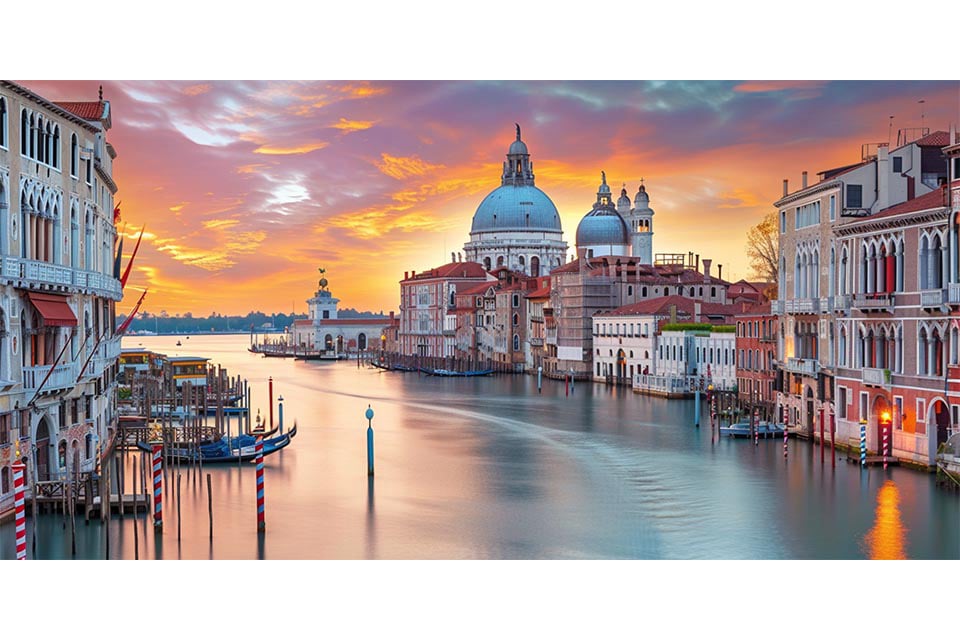
SAN MARCO
We are in the most famous and most visited sestiere of Venice. Here you will find some of the city’s main landmarks, such as St Mark’s Basilica with its freestanding bell tower, St Mark’s Square, the Doge’s Palace and the Rialto Bridge.
The Merceria is the street that connects St Mark’s Square — the seat of Venice’s religious and political power — with Rialto, the city’s former economic and commercial centre.
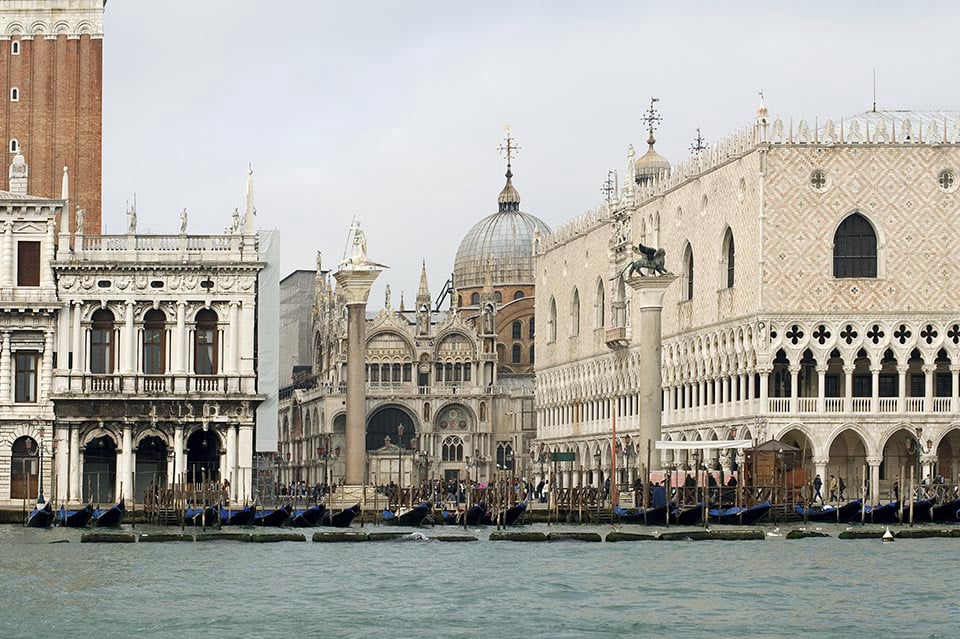
The small square that gives access to St Mark’s waterfront is called the Piazzetta. Two monolithic columns frame what was originally the city’s main maritime gateway. The Byzantine capitals of the columns support a sculpture of the Lion of St Mark and a statue of St Theodore, the city’s first patron saint.
On the side facing the canal, the Piazzetta is bordered by the west façade of the Doge’s Palace and the Libreria Sansoviniana. This building was designed by Jacopo Sansovino to house the nearly one thousand Greek and Latin manuscripts donated by Cardinal Bessarion. Today, the collection of this Byzantine scholar is preserved in the Zecca, the former mint that now houses the Marciana Library.
ST MARK’S SQUARE
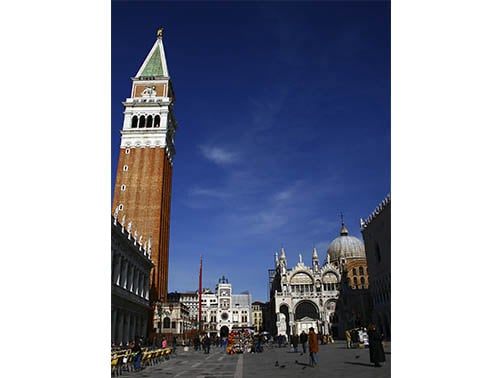
It is the only square in the city; all other open spaces are known as campo or campiello. In the ninth century, far from being the tourist centre it is today, it was an area of vegetable gardens watered by the Batario stream, which was later covered over to allow the construction of the square.
The first church of St Mark was dedicated to St Theodore, the city’s patron saint at the time. Beside it stood the old ducal castle, with its towers and walls. In 1723 the convent of San Zaccaria and its gardens made way for the remodelling and enlargement of the square, transforming it into the city’s central hub.
The square has an irregular shape: it is 82 metres wide on the eastern side, where the basilica and the Doge’s Palace stand, and 57 metres wide on the western side, with a total length of 175 metres.
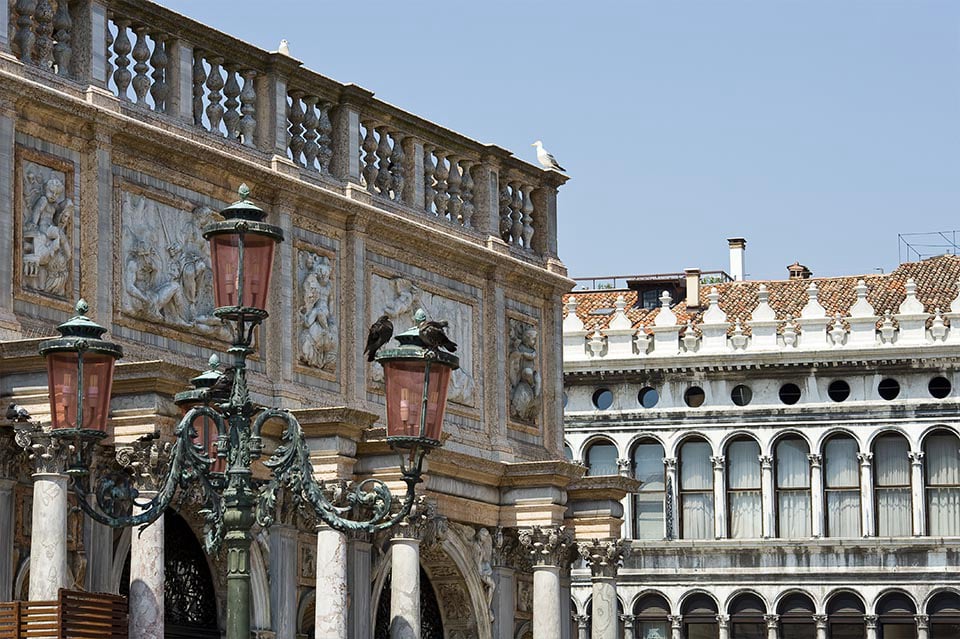
Along the northern side stand the Procuratie Vecchie, and opposite them the Procuratie Nuove, which Napoleon used as a residence during the French occupation. On the western edge of the square rises the Napoleonic wing.
ST MARK’S BASILICA
With the arrival of the relics of St Mark in the year 828, the first basilica was built. According to tradition, Venetian merchants smuggled the body of the evangelist out of Egypt hidden inside a barrel of butter in order to avoid inspection by the Muslim guards.
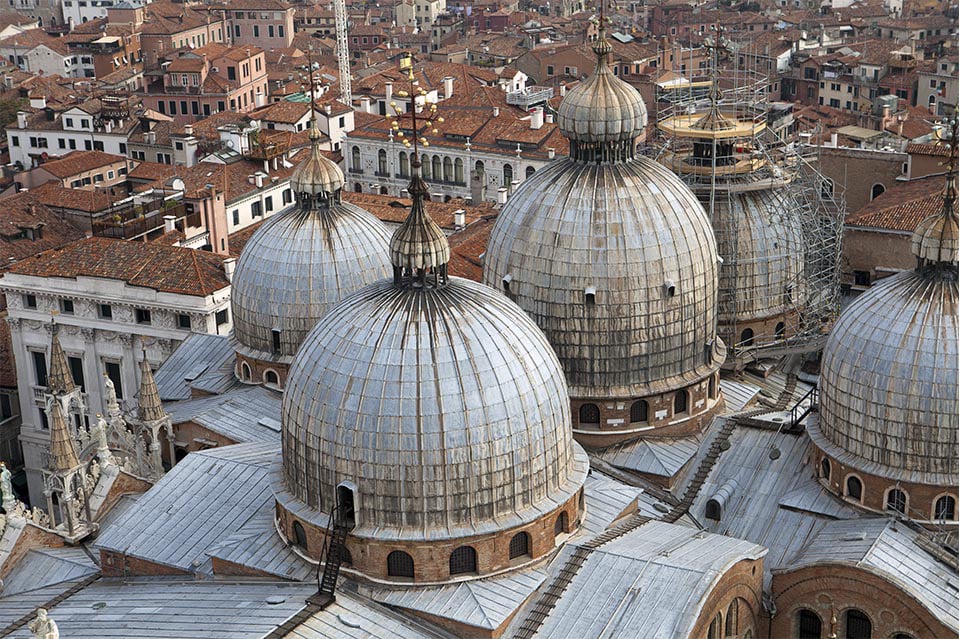
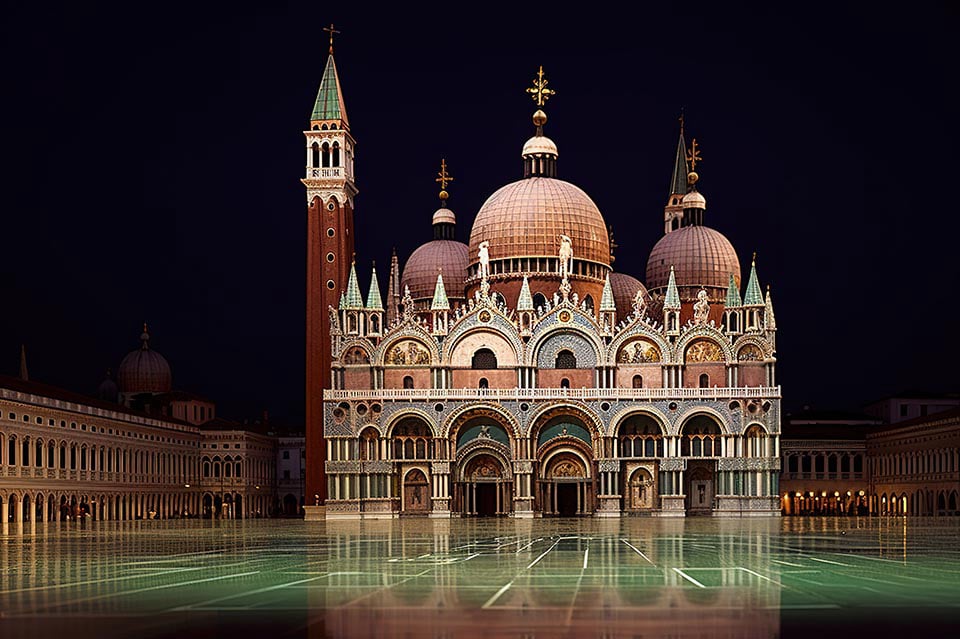
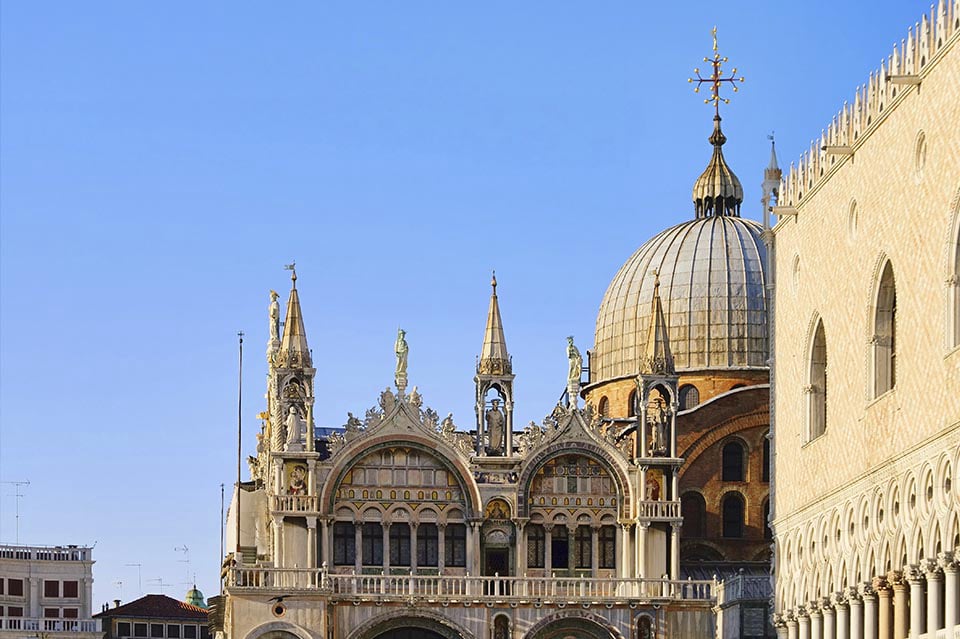
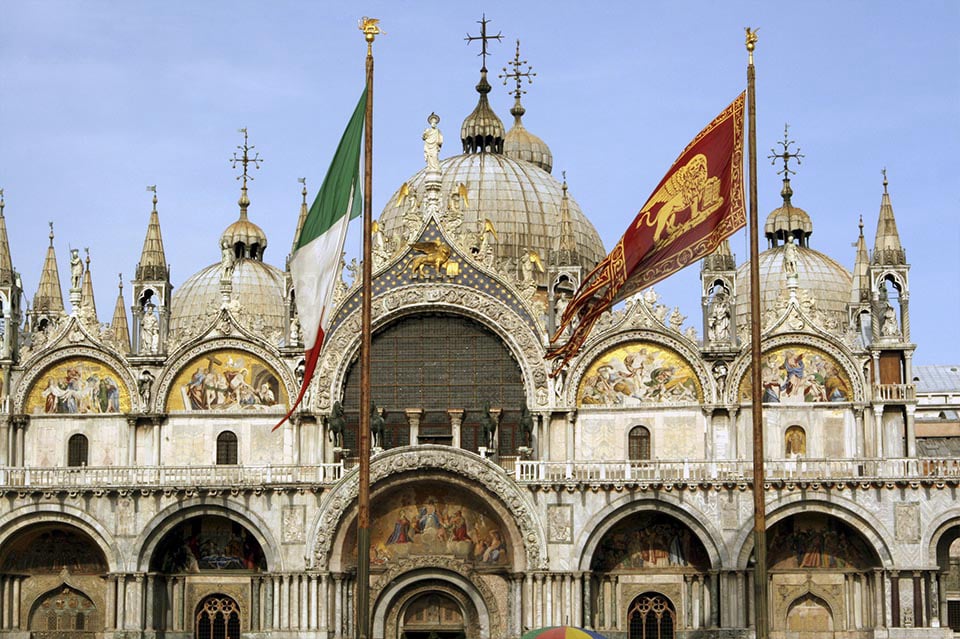
The first basilica was destroyed after the fire of the Doge’s Palace caused by the revolt of 976, and a second basilica was consecrated two years later. The present building dates from the eleventh century and has a Greek cross plan with five domes. Its façade has two levels, each divided by five round arches.
On the lower level, the semicircles of the arches are decorated with mosaics depicting scenes from the life of St Mark. The entrance to the basilica, beneath the central arch, is flanked by thirteenth-century Romanesque sculptures.
The upper level features Gothic sculptures in its central arch, and the mosaics illustrate biblical scenes.
In the thirteenth century, four bronze horses brought from Constantinople were installed on the terrace of the basilica’s roof. Napoleon took the Byzantine quadriga after conquering Venice, and it was not returned until 1815. The horses now displayed in their original position are copies; the originals are kept in the St Mark’s Museum.
Venice then became an independent episcopal see, as until that time it had been under the authority of the bishoprics of Grado and Aquileia. This temple became the principal centre of Catholic worship in Venice, and in addition to being designated a basilica, it was also granted the titles of cathedral and patriarchal church.
A law of the Venetian Republic required the wealthiest merchants and traders of the city to make donations for the decoration of the basilica. The building was also enriched with pieces taken during military campaigns across the Mediterranean. As a result, although its artistic style is clearly Byzantine, the variety of styles and materials gives it a distinctive character and enhances its beauty.
The portico of the basilica, also known as the Church of Gold, is covered by a seventeenth-century mosaic representing the recovery of the body of St Mark.
We now move inside with the audio guide, where dim light predominates because many of the windows on the ground floor were walled up. The light that allows visitors to admire the more than 4,000 square metres of mosaics enters through the vaults of the ceiling. The floor is uneven because the wooden piles supporting the basilica have gradually shifted over the centuries.
The Pala d’Oro is a golden altarpiece set with three thousand precious stones, eighty enamels and 250 gold panels, located behind the main altar. It dates from 1345 and depicts Christ, the Virgin and the Evangelists.
The Campanile, the bell tower that stands independently beside the basilica, was rebuilt after collapsing in 1902. At 98 metres high, it offers impressive views over the city.
DOGE’S PALACE
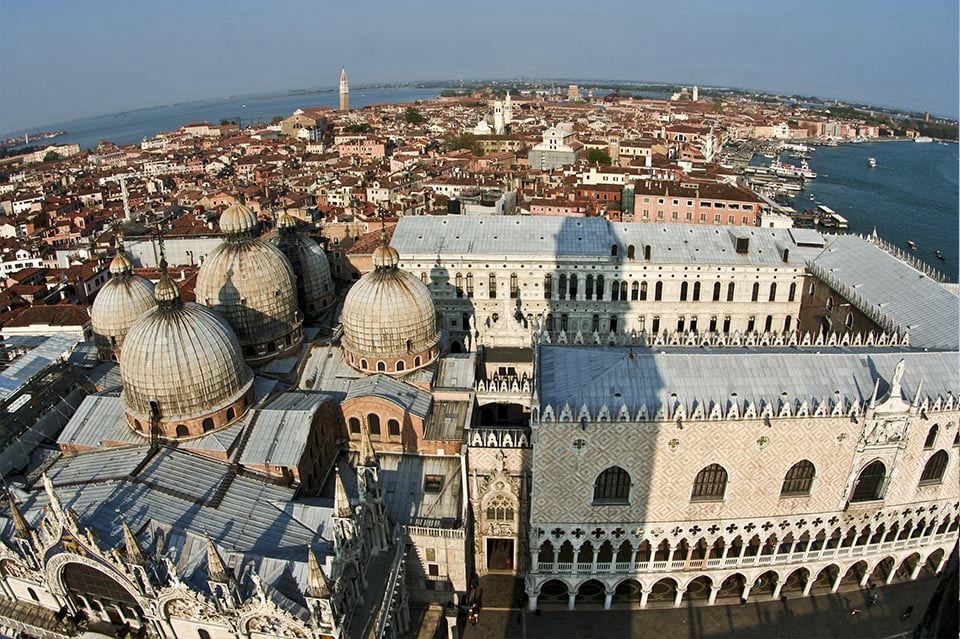
Today, the Ducal Palace is a museum dedicated to the history of the people of Venice. For centuries it was the residence of the Doge and the place where the Great Council and the senators met, and where distinguished guests were received. The secret service and the courts also had their offices in the palace.
This Gothic-style fortress safeguards the artistic heritage amassed over seven centuries by its doges, the supreme magistrates who governed the Venetian Republic throughout its history.
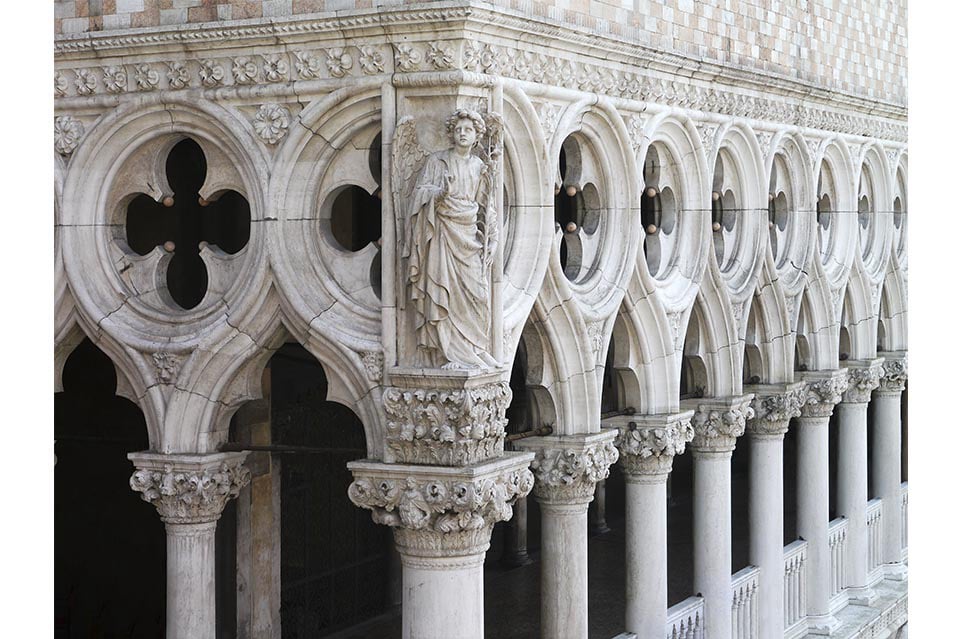
The pink façade rests on an arcade with medieval capitals. It was built using a technique known as mass inversion, which creates the impression that such slender columns could not possibly support the structure above.
The impressive Giants’ Staircase, with statues of Mars and Neptune by Sansovino, leads up to the loggias or galleries. Here you will find the so-called Mouth of Truth, or Lion’s Mouth, a slot where citizens could deposit accusations against their neighbours. These accusations were anonymous until the fourteenth century.
The palace displays works by artists such as Tintoretto, Titian and Veronese. Among the latter’s works, Paradise stands out — the largest canvas in the world, measuring 22 metres by 7 — displayed in the Hall of the Great Council.
Most of the main section of the palace was occupied by the Doge’s private apartments, which he was not allowed to leave without permission. One person who did not wait for authorization to escape was the adventurer Giacomo Casanova, who fled across the rooftops from the prison known as the Piombi, so called because it lay beneath the palace’s lead roof. The cells known as the Pozzi, or wells, were located at water level and were used to imprison the most dangerous criminals.
The Bridge of Sighs crosses the Rio del Palazzo and connects the Doge’s Palace with the New Prisons.
RIALTO BRIDGE
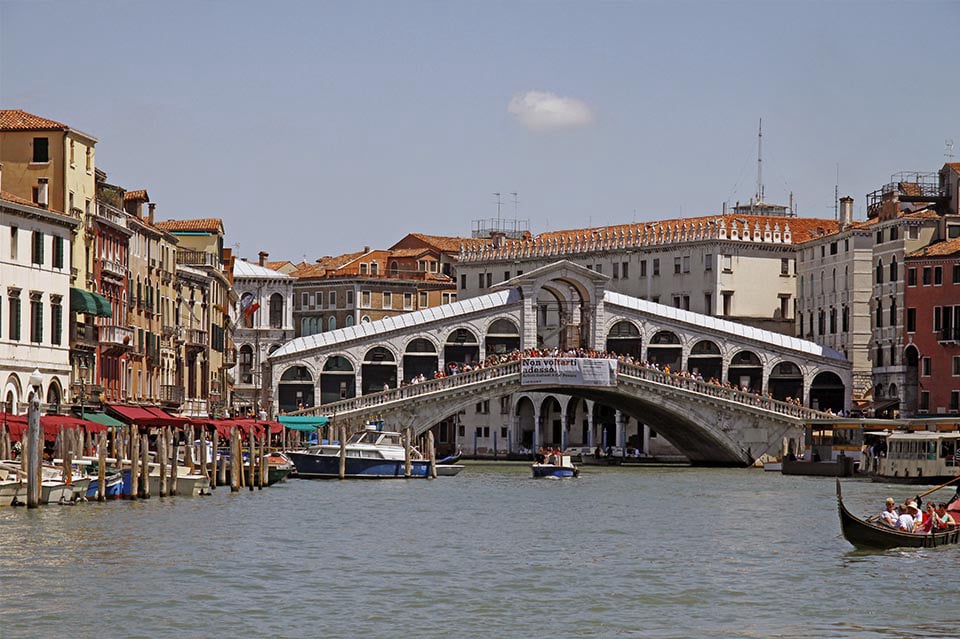
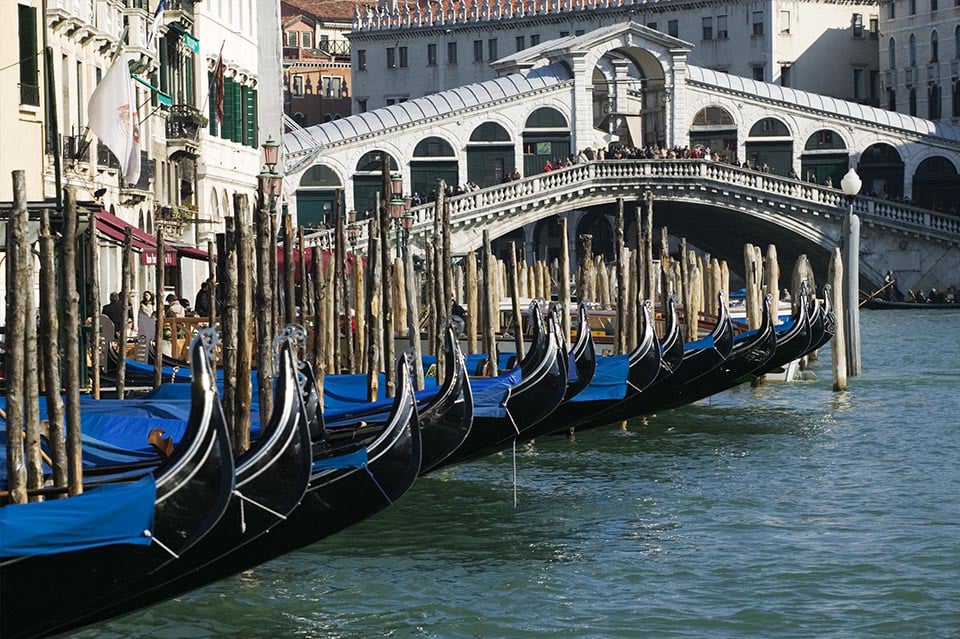
The Rialto Bridge was built between 1588 and 1592 by Antonio da Ponte, on the same site where the Coin Bridge stood in the twelfth century. Until the nineteenth century it was the only crossing over the Grand Canal. Later, three more bridges were built: the Constitution Bridge, the Scalzi Bridge and the Accademia Bridge.
The bridge is built largely of stone and consists of a single arch. Its structure imitates that of its wooden predecessor, with two sloping ramps that meet at a central portico and create a clearance of 7.5 metres, high enough for galleons to pass beneath.
Along its sides are twelve small arcaded shops. With its 48 metres in length, the bridge connects the Rialto Market with the streets leading toward St Mark’s Square.
It is worth crossing the bridge on foot and also passing beneath it by boat, to enjoy both experiences and appreciate the difference in perspective.
LA FENICE
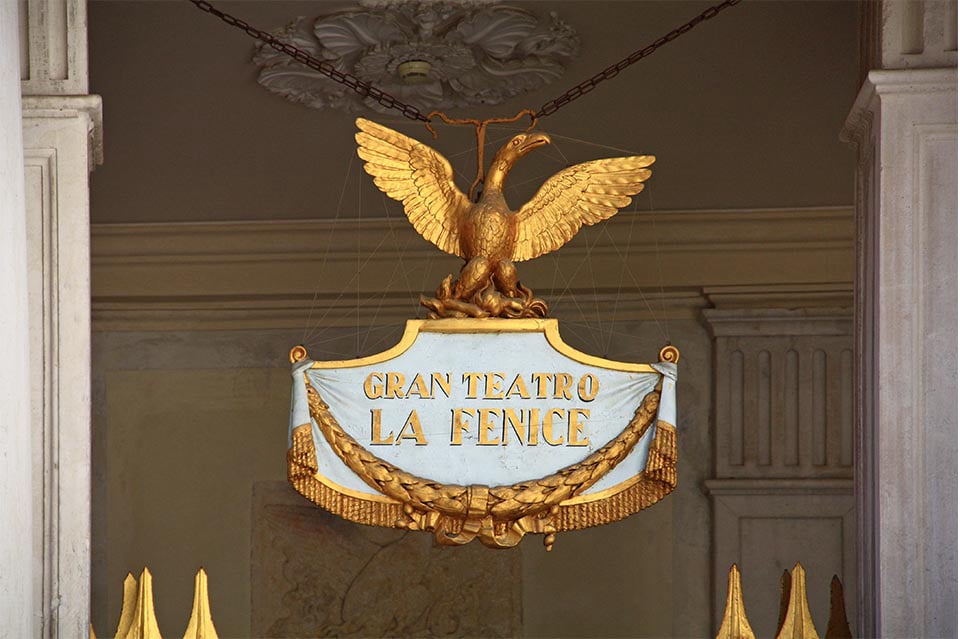
In 1774 Venice’s most important opera house, the Teatro San Benedetto, was destroyed by fire. After it was rebuilt, a dispute arose between the owning family and the company that managed it, the Noble Society of Stage Designers. The powerful Venier family retained ownership of the building, and the managers decided to construct a new theatre in Campo San Fantin, whose name refers to the Phoenix and its rebirth from the ashes.
The new theatre, financed by a company of box manufacturers, was designed by the architect Gianantonio Selva. Since its inauguration in 1792, this temple of opera has welcomed some of the most renowned conductors, including Karajan, Stravinsky and Bernstein, as well as the finest interpreters of bel canto, such as Maria Callas, Luciano Pavarotti and Alfredo Kraus.
Giuseppe Verdi began his collaboration with La Fenice in 1844, where he premiered La Traviata and Rigoletto. Later, in 1930, the Venice Biennale held its first International Festival of Contemporary Music here.
The theatre is also well worth visiting even if you are not attending a performance, thanks to its elegant interior decoration. Highlights include the atrium, the foyer, the Apollonian Rooms and the royal box in the upper galleries. The theatre also hosts temporary exhibitions and a permanent exhibition dedicated to the diva Maria Callas.
La Fenice suffered two fires, in 1836 and in 1996, each followed by major reconstruction work. The most recent fire appears to have been caused by two electricians who were unable to finish a job on time. The reconstruction was entrusted to Aldo Rossi, who faithfully restored the building in keeping with the famous motto: “as it was, where it was.”
CORRER MUSEUM
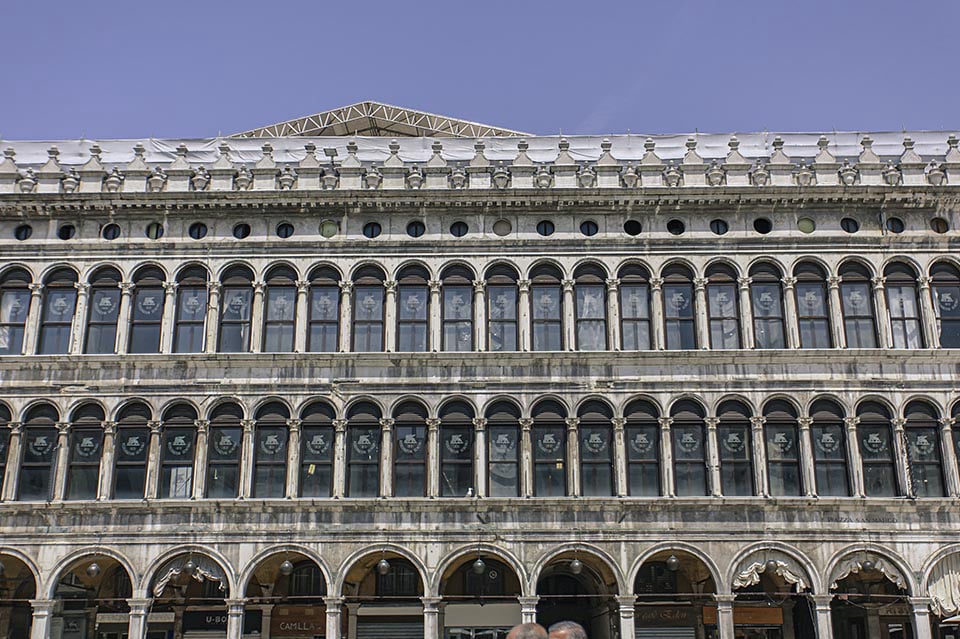
The museum houses the collection on the political and cultural history of Venice donated to the city by Teodoro Correr in 1830. The building occupies the former Napoleonic Wing, erected on the site of the Church of San Geminiano, demolished in 1808, as well as part of the Procuratie, which once served as the offices and residences of the Republic’s high officials.
The Napoleonic Wing links the Procuratie Vecchie with the Procuratie Nuove. In addition to the Correr Museum, visitors may also explore the Archaeological Museum and the Zecca, which houses the Marciana Library. Palladio once described this building as the finest structure built since antiquity.
The Zecca, or mint, was constructed by Sansovino between 1557 and 1566. This two-storey building, located beside the Libreria on St Mark’s waterfront, has the appearance of a fortress, as it was designed to safeguard the city’s gold.
The library, established after Cardinal Bessarion donated around one thousand Greek and Latin manuscripts in 1468, now holds more than 900,000 volumes thanks to later additions.
DORSODURO
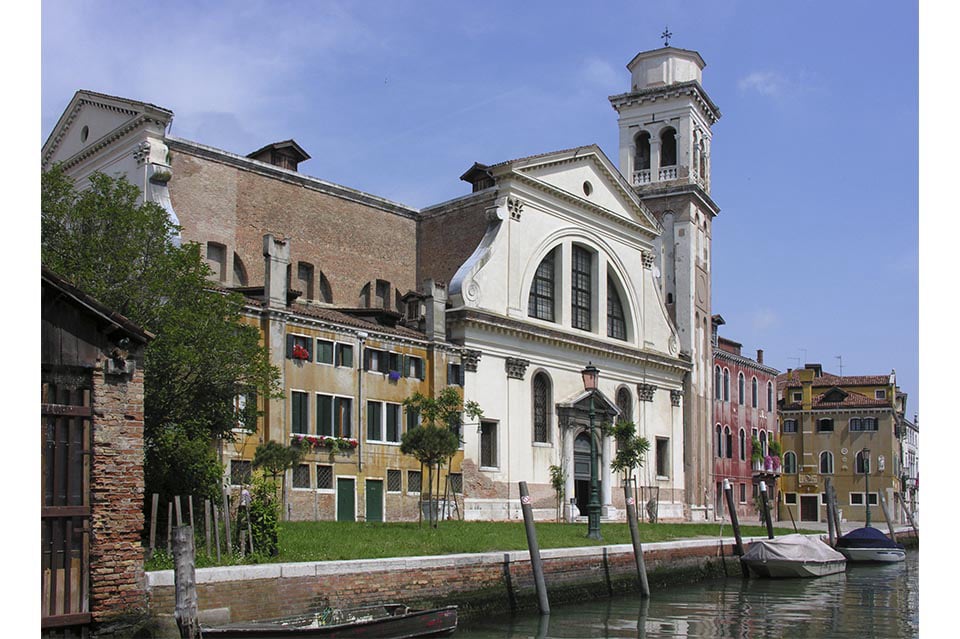
The sestiere of Venice located furthest to the south, bordered by the Grand Canal and the Giudecca Canal, is a district known for the artistic treasures preserved in its churches and museums. Many of these works can be seen along what is known as the Dorsoduro Museum Mile. The name of the district means “hard back” in Italian and may refer to the firmness of the clay ground on which the neighbourhood was built.
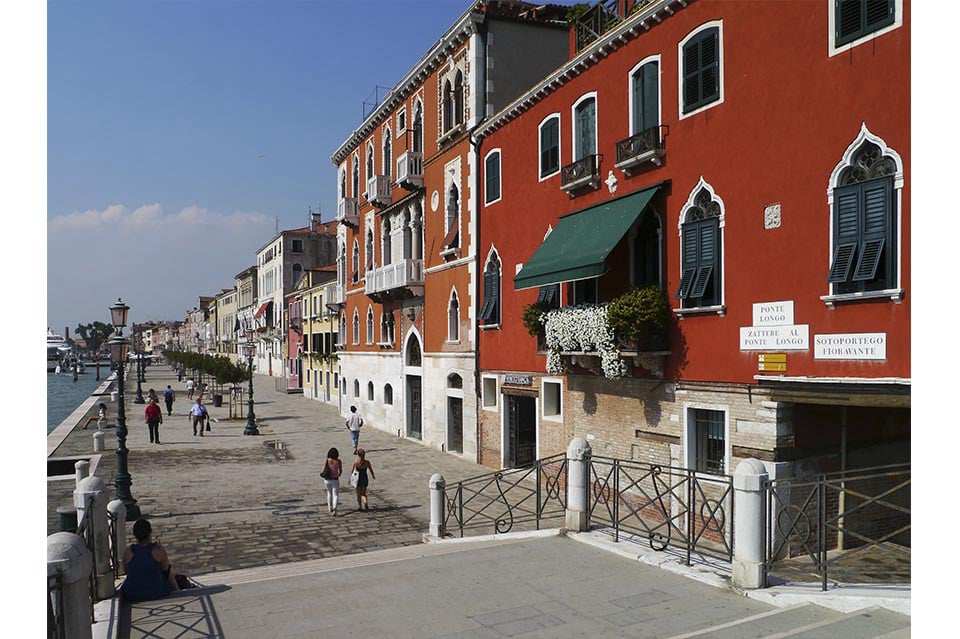
Campo Santa Margherita, a popular meeting place for university students in the evening, hosts fish, fruit and vegetable stalls during the day. The Zattere, along the southern edge of the district, are now a waterfront promenade stretching for about two kilometres. In the past, this area housed salt warehouses and the old quay where timber was unloaded. Today the promenade offers magnificent views of the island of Giudecca and provides a pleasant place to relax with a coffee or one of Venice’s famous ice creams at the many terraces along the water.
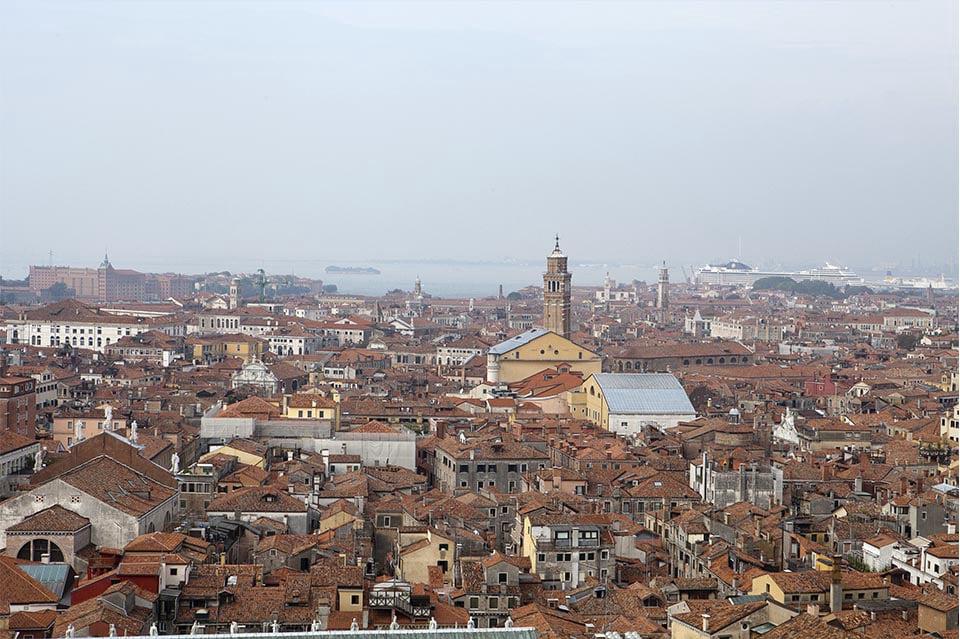
GALLERIE DELL’ACCADEMIA
A Napoleonic decree of 1807 moved the Academy of Painters and Sculptors of Venice, founded in the eighteenth century, from the district of San Marco to the Church of Santa Maria della Carità and the Convent of the Lateran Canons. With this relocation, it became the teaching centre of the Academy of Fine Arts of Venice.
At first, only students’ works were kept here, but the collection soon grew thanks to donations and acquisitions, making several renovations necessary. These were carried out by architects including Giorgio Massari, Andrea Palladio and Giovanni Selva.
Although its original purpose was to acquire works by Italian and foreign artists to serve as examples for students, from the late nineteenth century the focus shifted towards local painters. Today the gallery houses the world’s most important collection of Venetian painting, spanning five centuries, from the fourteenth to the eighteenth.
Among its masterpieces are The Tempest by Giorgione and The Pietà by Titian. The controversial painting The Feast in the House of Levi, originally titled The Last Supper, is also displayed here. The work brought its painter, Veronese, before the Inquisition for depicting dogs and drunken figures alongside the apostles.
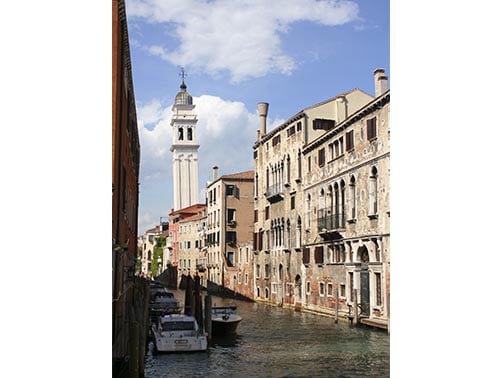
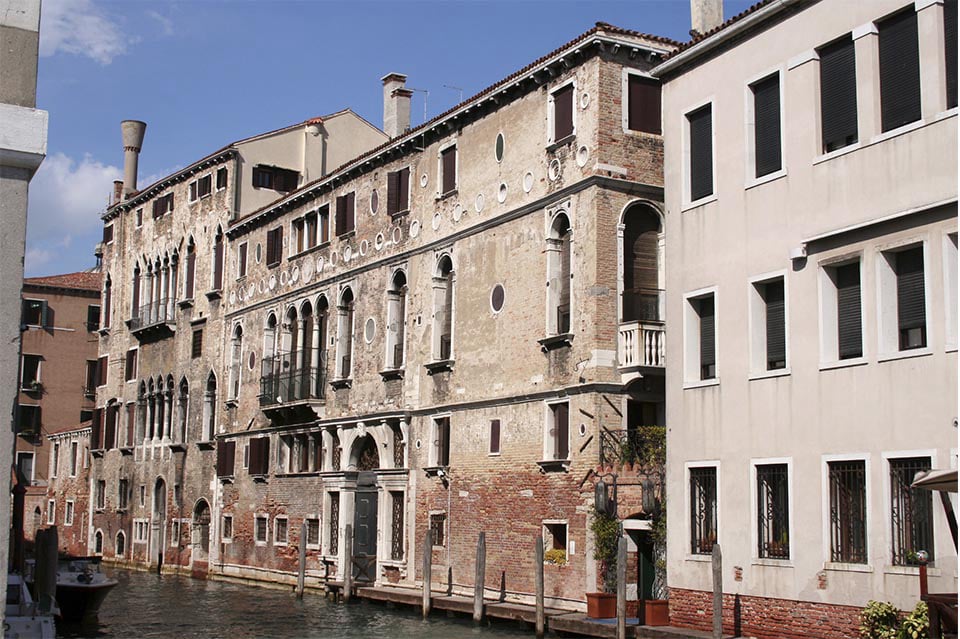
PUNTA DELLA DOGANA
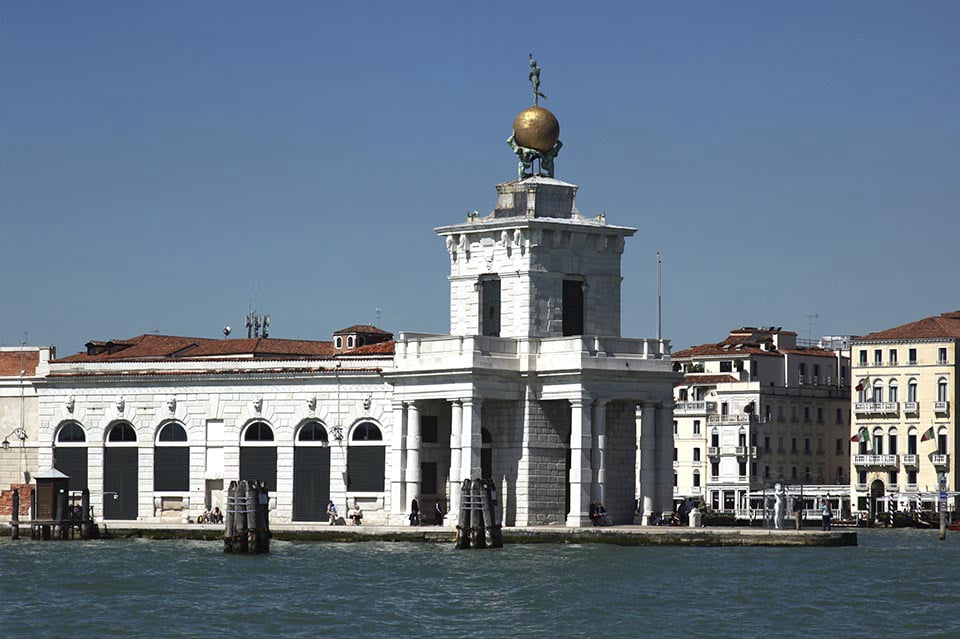
This strategic point marks the division between the Grand Canal and the Giudecca Canal.
The Dogana da Mar, or sea customs house, had to be moved from the Arsenal to the western tip of Dorsoduro as the city’s commercial activity expanded. These warehouses, built in 1677 by Giuseppe Benoni, served as the customs house until the 1980s. After being acquired by the Pinault Foundation in 2009, the building began hosting temporary exhibitions of contemporary art.
Next to the Dogana stands the Patriarchal Seminary, a former Baroque convent designed by Baldassare Longhena in the seventeenth century. The building began receiving works of art after Napoleon issued a decree at the beginning of the nineteenth century ordering the suppression of many churches and convents. It also houses the Manfrediniana Art Gallery, a collection bequeathed by the Marquis Manfredini.
PEGGY GUGGENHEIM MUSEUM
The Palazzo Venier dei Leoni is also known as the unfinished palace, as only one of the four planned floors was ever built. It was acquired as a residence by Peggy Guggenheim, heiress to the American magnate who died in the sinking of the Titanic. Today the museum displays her collection of more than 200 European and American sculptures and paintings from the first half of the twentieth century, including Cubist, Futurist, Expressionist and Surrealist works by artists such as Picasso, Pollock, Kandinsky, Dalí and Miró.
The patron of the arts, who fled Paris just days before the Nazi occupation, later married the Surrealist painter Max Ernst. This helped her expand her network within the art world. Peggy Guggenheim is buried beside her beloved dogs, beneath the sculptures by Giacometti that adorn the garden of her palace.
CHURCH OF SAN SEBASTIANO
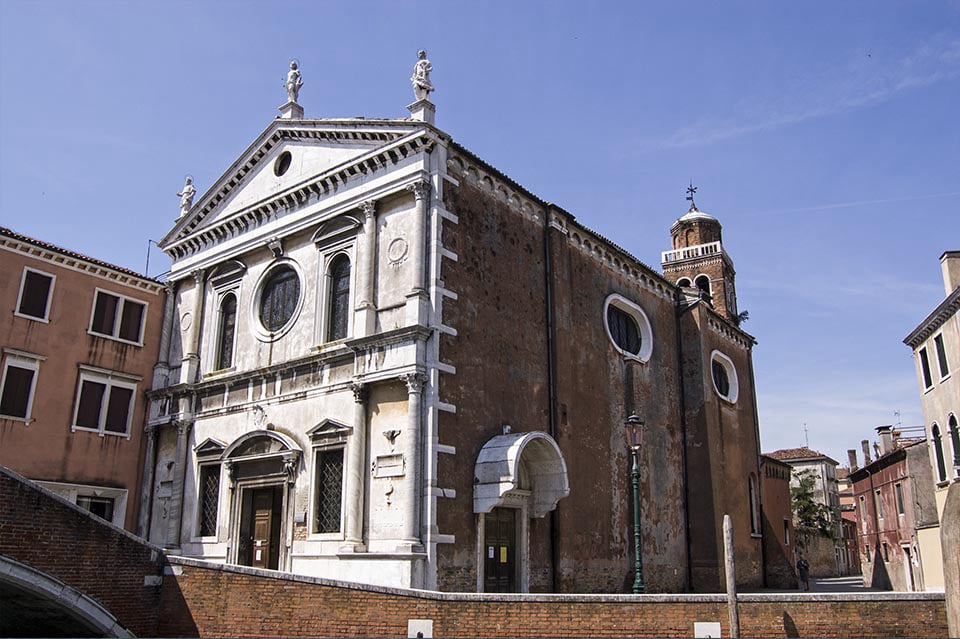
This single-nave Renaissance church was founded in the fifteenth century by hermit monks of Saint Jerome.
Between 1505 and 1548 it was remodeled by Antonio Scarpagnino. The abbot Bernardo Torlini commissioned a cycle of paintings from Paolo Caliari, a painter from Verona known as Veronese, whose remains rest in this church at his own request. According to legend, he took refuge here after being accused of murder.
The painter worked in this church for three decades and also designed the organ, whose panels are decorated with scenes from the life of Jesus. The ceiling depicts episodes from the life of Esther, and above the high altar you can see a Madonna in Glory with Saints. Another highlight is a painting of Saint Nicholas by Titian.
BASILICA OF SANTA MARIA DELLA SALUTE
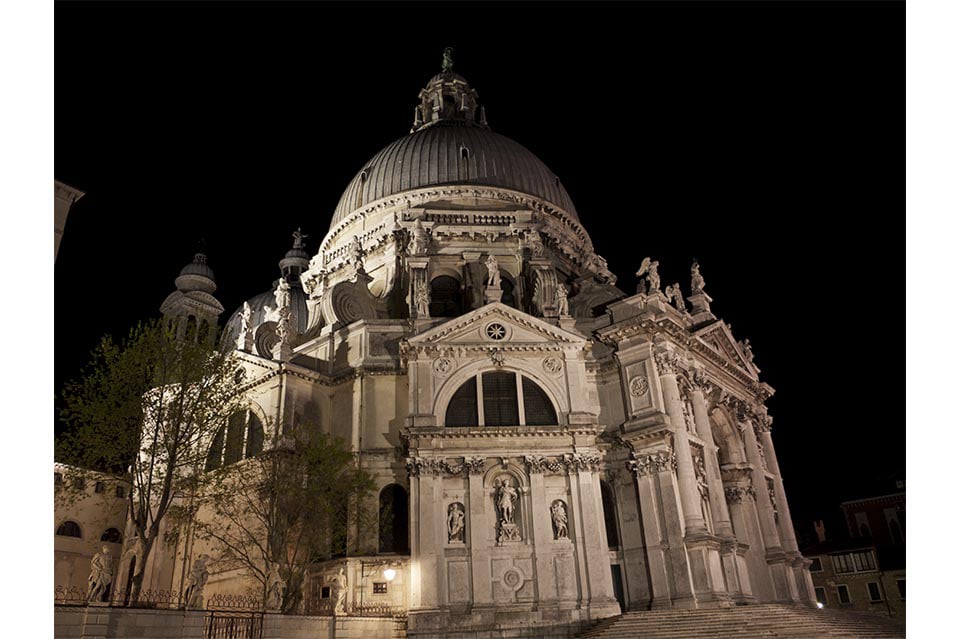
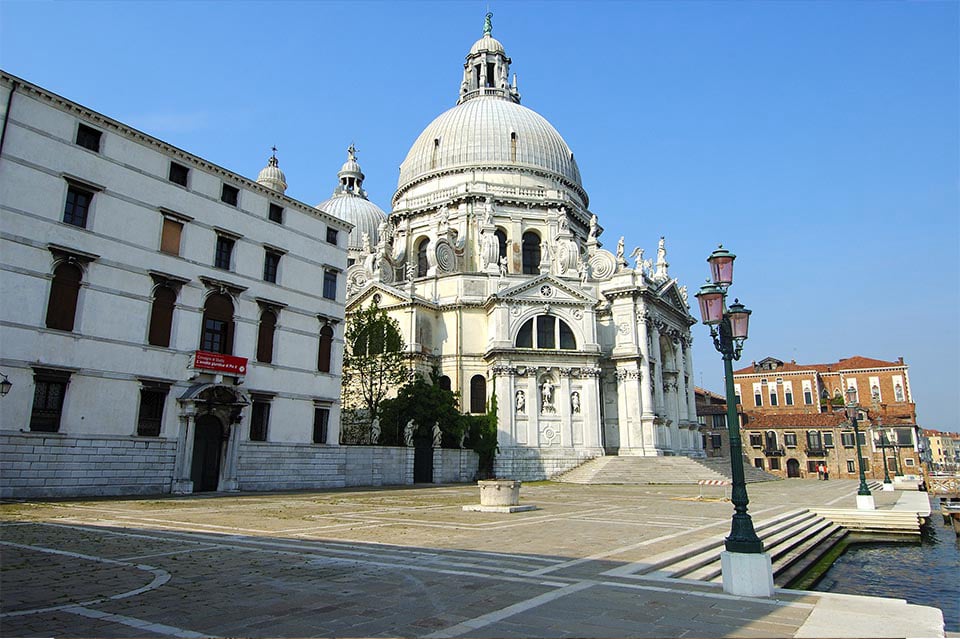
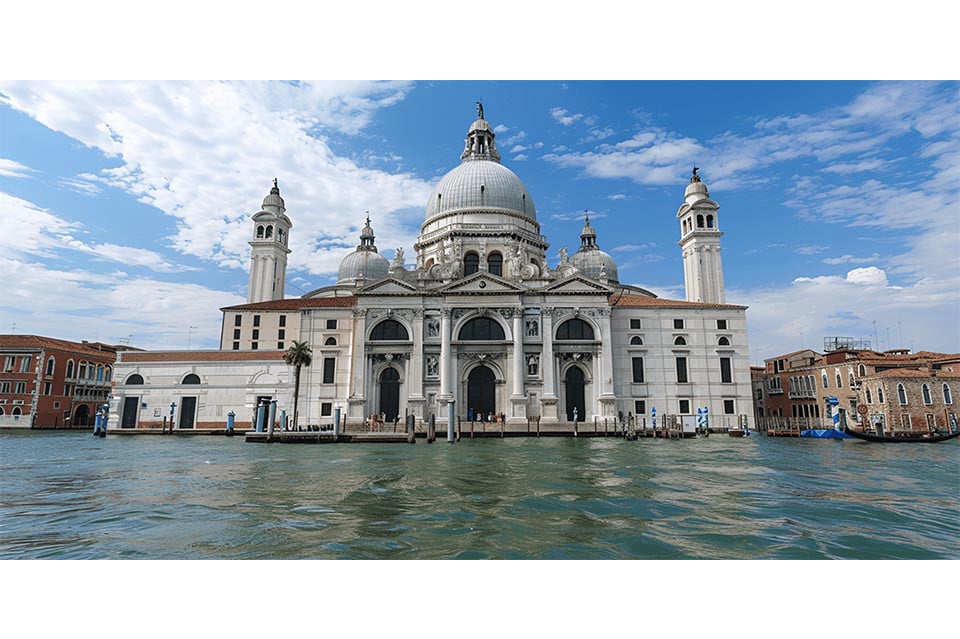
The Serenissima commissioned Baldassare Longhena to build this church, located at Punta della Dogana, in gratitude to the Virgin for the end of the devastating plague that struck the city in 1630.
Longhena spent fifty years completing the project. He designed an octagonal plan symbolising a crown for the Virgin, which forms the base of the church’s immense dome. The exterior is decorated with large volutes, and from the steps leading up to the entrance there are fine views of the Doge’s Palace. In the sacristy of this Baroque church visitors can admire works by Titian and Tintoretto.
Every 21 November the Feast of the Madonna della Salute is celebrated with a procession that begins in St Mark’s Square and ends at the church, crossing a temporary bridge made of boats. The writer Henry James was a great admirer of this church.
CA’ REZZONICO
In one of the most beautiful palaces on the Grand Canal, visitors can discover how the Venetian nobility lived during the Settecento, the eighteenth century. Frescoes by Tiepolo decorate the ceilings, paintings by Longhi adorn the walls, and works by Canaletto and Rosalba Carriera hang throughout the rooms. The marble floors and the long colonnade leading down to the Grand Canal reflect the elegance and prestige of the residence.
The palace was commissioned by the Bon family and designed by Baldassare Longhena. In 1751 it passed into the hands of the Rezzonico family after the bankruptcy of its original owners. Giorgio Massari was chosen to complete the palace, where notable figures such as the poet Robert Browning and the composer Cole Porter later lived.
SAN POLO
The smallest and most central district of Venice is home to the largest square in the city, Campo San Polo, where the Church of San Paolo Apostolo stands and where bull games were once held.
This sestiere was one of the first parts of the city to be inhabited, which explains its maze of narrow streets and its dense concentration of houses. It is connected to San Marco by the Rialto Bridge. Adding colour and life to the neighbourhood are the Pescaria, the fish market, and the Erbaria, the market for fruit and vegetables.
In the former red-light district stands the so-called Bridge of Breasts, whose name comes from the prostitutes who used to display their semi-nude bodies from nearby windows to attract clients.
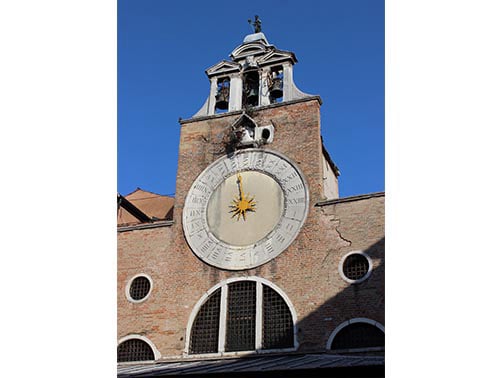
In Campo San Giacomo di Rialto you will find the Gobbo di Rialto, a marble statue of a kneeling male figure carrying a small staircase on his back. Officials would climb the steps to announce decrees and sentences to the citizens.
CHURCH OF SAN POLO
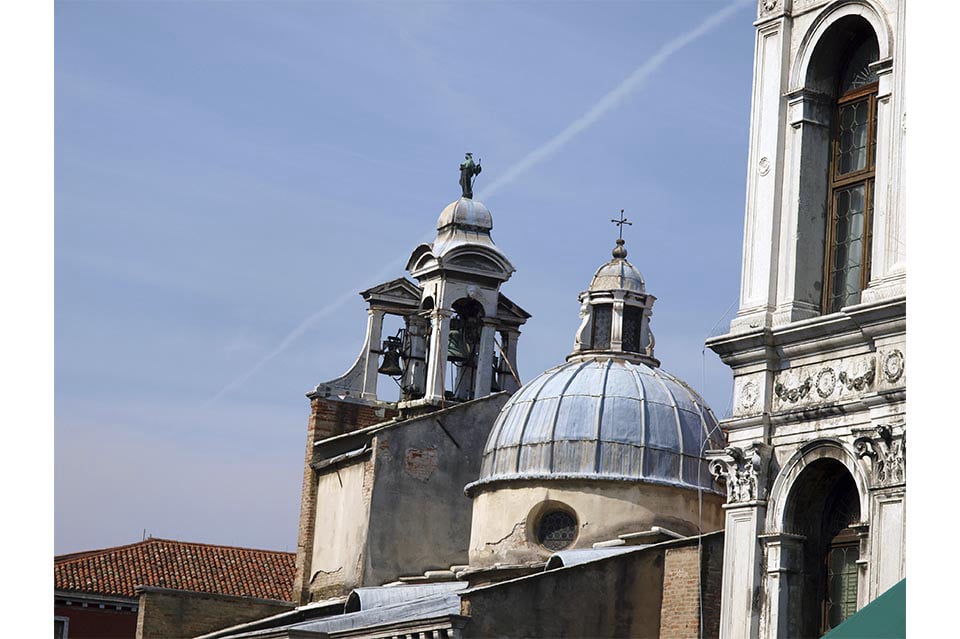
Built in the ninth century by order of the Doge Pietro Gradenigo, the church preserves its original three-nave layout, typical of Venetian-Byzantine architecture. Despite the reconstructions carried out in the fifteenth and eighteenth centuries, it still retains a wooden ceiling from the fifteenth century.
Inside the church you can see The Last Supper and The Assumption of the Virgin by Tintoretto, as well as an altarpiece by Veronese depicting the Marriage of the Virgin. Particularly notable are the fourteen paintings of the Stations of the Cross, an eighteenth-century masterpiece by Giandomenico Tiepolo.
CASA DI CARLO GOLDONI
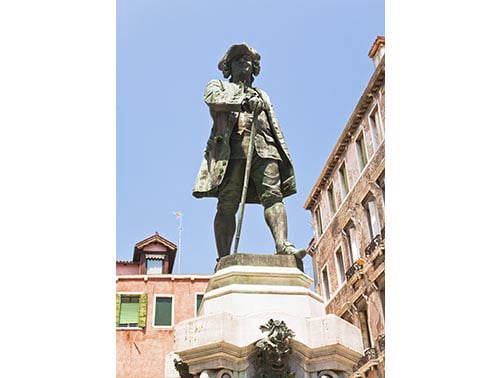
This palace, also known as Centanni, dates from the fifteenth century and is built in Venetian Gothic style. It once housed an artistic and literary academy when the Centanni family lived in the building as tenants. In 1707 the great playwright Carlo Goldoni was born in this palace. In 1953, after being donated to the city and restored, the building became home to the Goldoni Museum and a centre for theatrical studies.
Its most striking feature is the tripartite façade overlooking the canal, with elegant four-light windows divided into four slender panels.
BASILICA OF SANTA MARIA GLORIOSA DEI FRARI
This church forms part of a monastic complex built by the Franciscans between the fourteenth and fifteenth centuries. The Franciscan Late Gothic style is reflected in its austere façade of exposed brick. Only three pinnacles crown the upper part, and three statues flank the entrance arch.
The church, where Titian is believed to be buried, is divided into three naves and seven chapels. On the high altar stands The Assumption of the Virgin, one of the masterpieces from the final phase of Titian’s career. Visitors can also admire Giovanni Bellini’s Triptych of the Virgin and Child, a masterpiece of fifteenth-century Venetian painting.
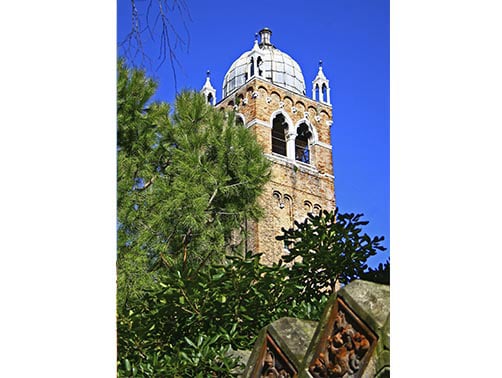
Outside, the terracotta bell tower rises to 70 metres, making it the second tallest in the city after that of St Mark’s.
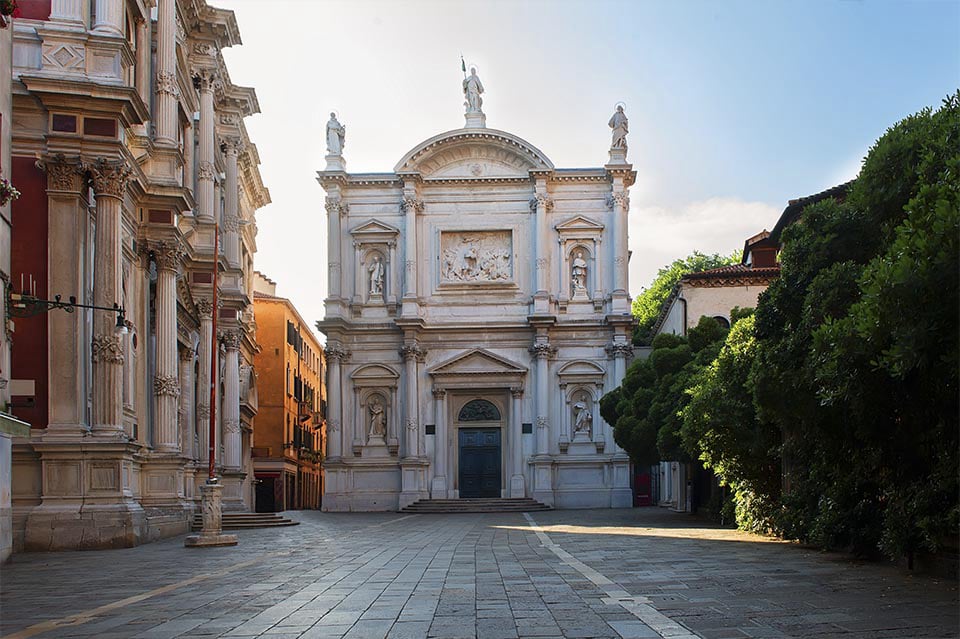
SCUOLA GRANDE DI SAN ROCCO
The Scuola was founded in 1478 by the brothers of Saint Roch, who devoted themselves to caring for and comforting victims of the plague, following the example of the saint to whom they were devoted.
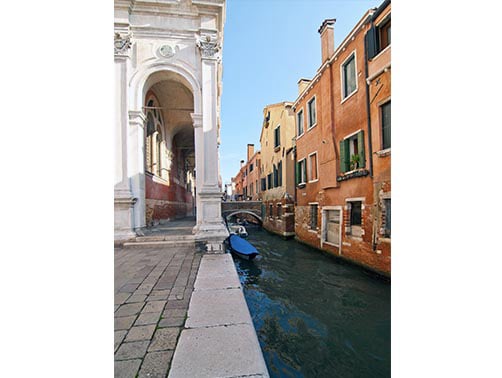
As the brotherhood grew, the Council of Ten of the Serenissima granted it the title of Scuola Grande. As a result, in 1517 Bartolomeo Bon was commissioned to build a new headquarters, later completed by architects including Scarpagnino. The building combines Renaissance and Baroque elements, a result of the long duration of the construction works.
In 1564 a competition was held to decorate the building, which Tintoretto won. Together with his pupils, he created the famous cycle of paintings depicting episodes from the Old and New Testaments, along with other works illustrating scenes from the life of Christ.
SANTA CROCE
Santa Croce is a relatively quiet district—at least by the standards of a city as visited as Venice. Its name comes from an ancient church that was demolished to make way for the Papadopoli Gardens, which in the nineteenth century housed a zoo and a botanical garden with exotic species.
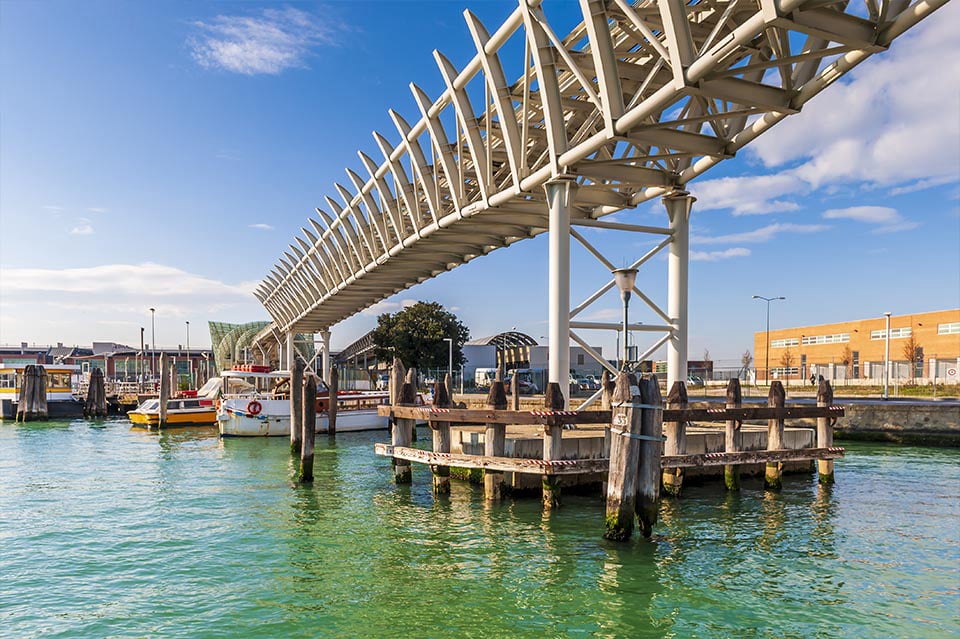
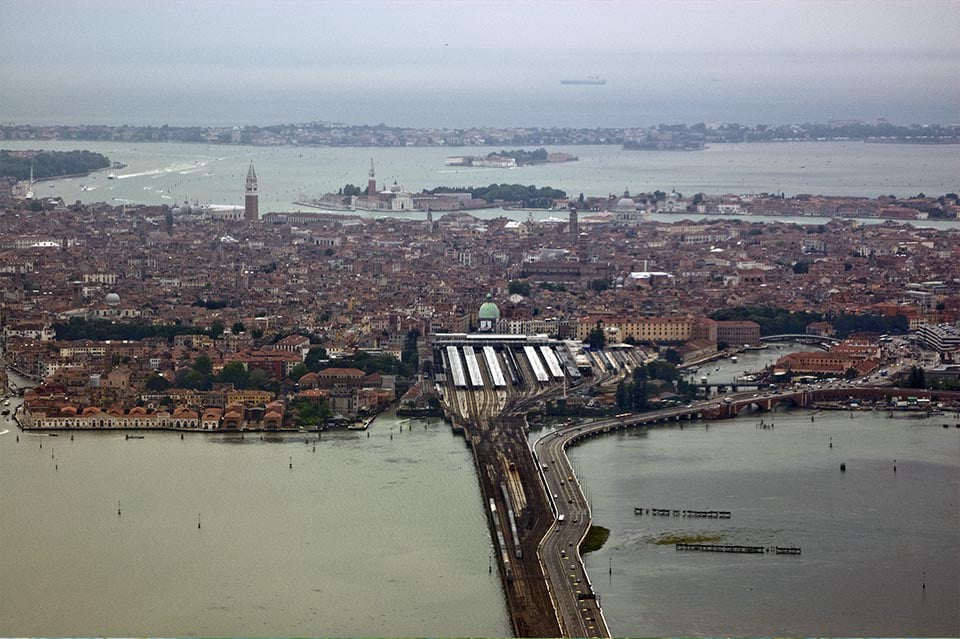
Piazzale Roma, with its bus station, is Venice’s main road transport hub linking the city with the mainland. This sestiere is linked to Santa Lucia railway station by the Constitution Bridge, designed by Santiago Calatrava.
FONDACO DEI TURCHI
The palace first served as a residence for the Venetian aristocracy from the thirteenth to the fifteenth centuries, before becoming the seat of the Natural History Museum at the end of the eighteenth century.
It houses an important library and preserves more than two million specimens, including exotic animals brought back by Venetian expeditions led by Marco Polo. The scientific institution also conducts significant research on the Venetian lagoon and its wildlife.
CHURCH OF SAN GIACOMO DALL’ORIO
This church, located in Campo San Giacomo dall’Orio, probably dates from the ninth or tenth century and is considered one of the oldest churches in Venice. Both the square and the church take their name from a laurel plant—the orio—that once grew in the area.
San Giacomo did not acquire its present structure, with a Latin cross plan and side chapels, until the thirteenth century. From that period the Romanesque bell tower has been preserved. The exterior is simple, while the richly detailed interior features a wooden ceiling with exposed beams shaped like the hull of an inverted ship. The central space is enclosed by a magnificent fourteenth-century wooden screen. The sacristy contains Renaissance paintings by artists such as Schiavone, Veronese and Palma the Younger.
CANNAREGIO
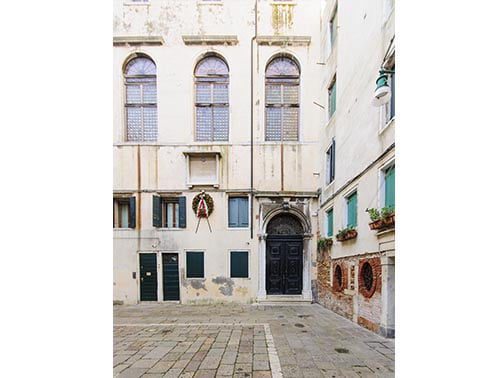
Cannaregio is the district facing the mainland and became Venice’s main gateway after the construction of the railway bridge in the mid-nineteenth century. It is characterised by its small campi, such as Sant’Alvise, dei Mori and dell’Abbazia, and it is also the area where the Jewish Ghetto was established.
The city’s most famous traveller, Marco Polo, was born in this district, and he is believed to be buried in the Church of San Lorenzo. The western part of the sestiere is crossed by the Cannaregio Canal, also known as the Canal Regio, the second most important waterway in the city after the Grand Canal.
Because the district covers a larger area than most parts of Venice, its urban layout is somewhat more regular, and many of its houses have a small garden or vegetable plot.
JEWISH GHETTO
Jews were not allowed to enter the city until the fourteenth century. During the Italian Renaissance, between the fourteenth and sixteenth centuries, they were authorised to practise professions such as book printing, medicine, trade and banking—activities in which they excelled until Pope Julius later prohibited them.
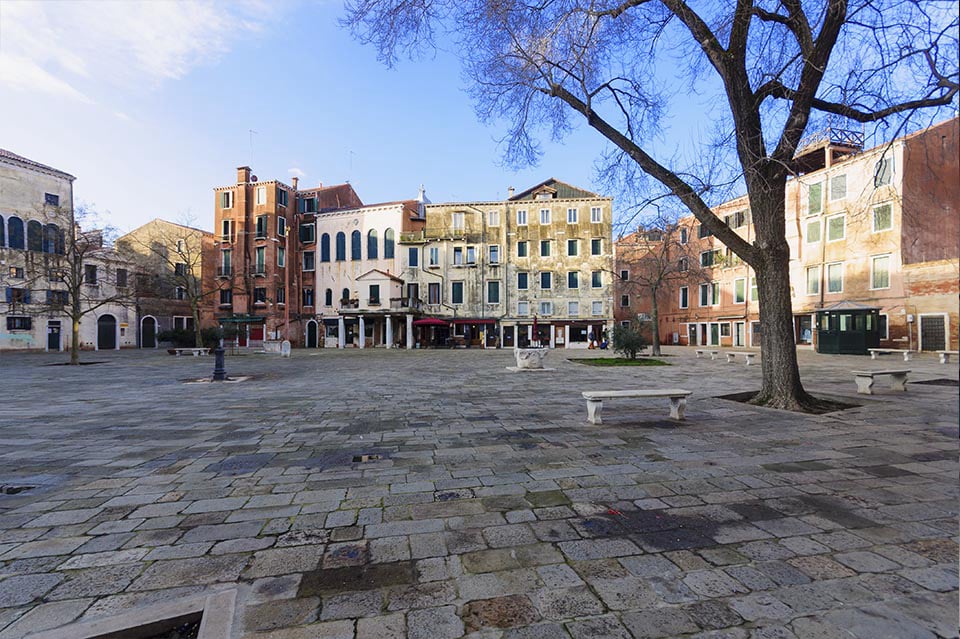
In 1516 the entire Jewish community was ordered to settle in the Ghetto Nuovo, or “new foundry”. This marked the creation of the oldest Jewish quarter in Europe and popularised the term “ghetto”, which would later spread throughout the continent. During the day Jews were allowed to circulate freely provided they wore a yellow hat or badge for identification.
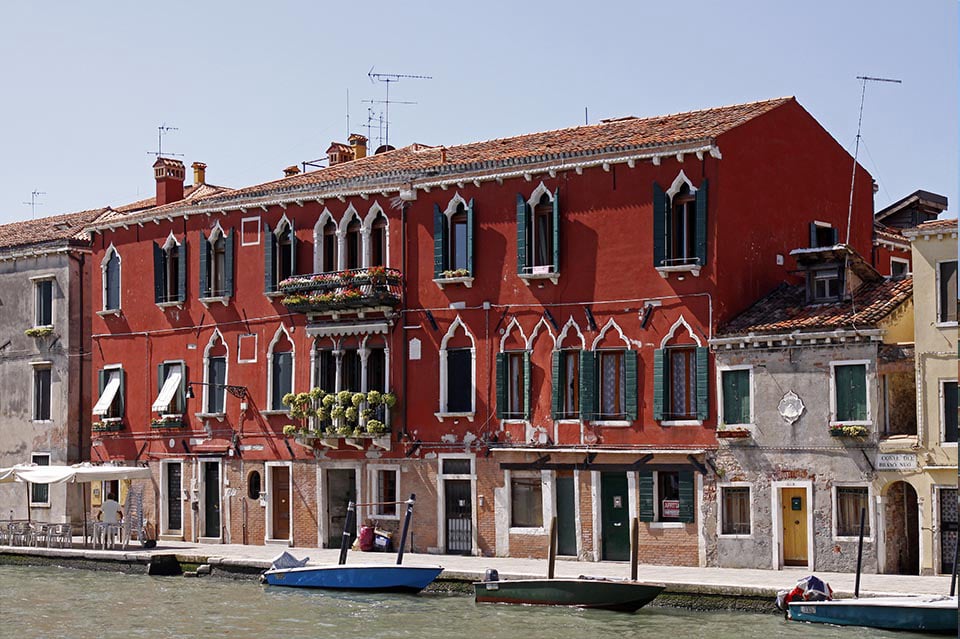
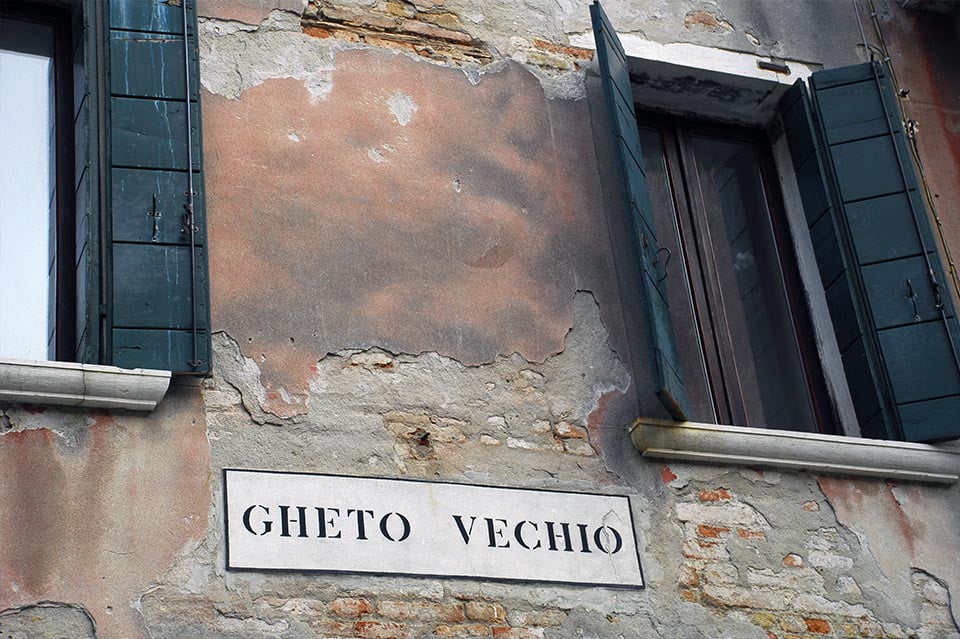
In 1541 more Jews arrived after being expelled from the Iberian Peninsula and were settled in the Ghetto Vecchio. The growing population forced the district to expand vertically, with buildings rising to as many as seven storeys and featuring very low ceilings.
The Levantine Synagogue, built in 1538, is the only one of the five synagogues in the ghetto with its own independent building and is also the most lavish. In 1943 Mussolini deported most of the residents to concentration camps, from which only 37 returned, a tragedy commemorated today by a monument in the neighbourhood.
CA’ D’ORO
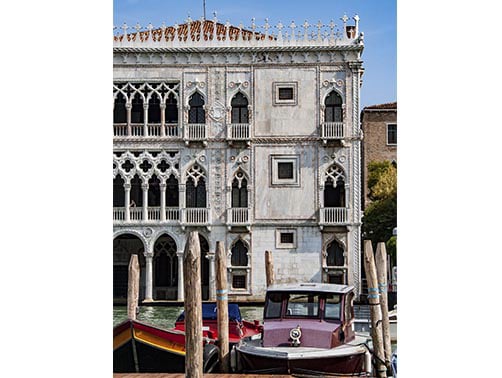
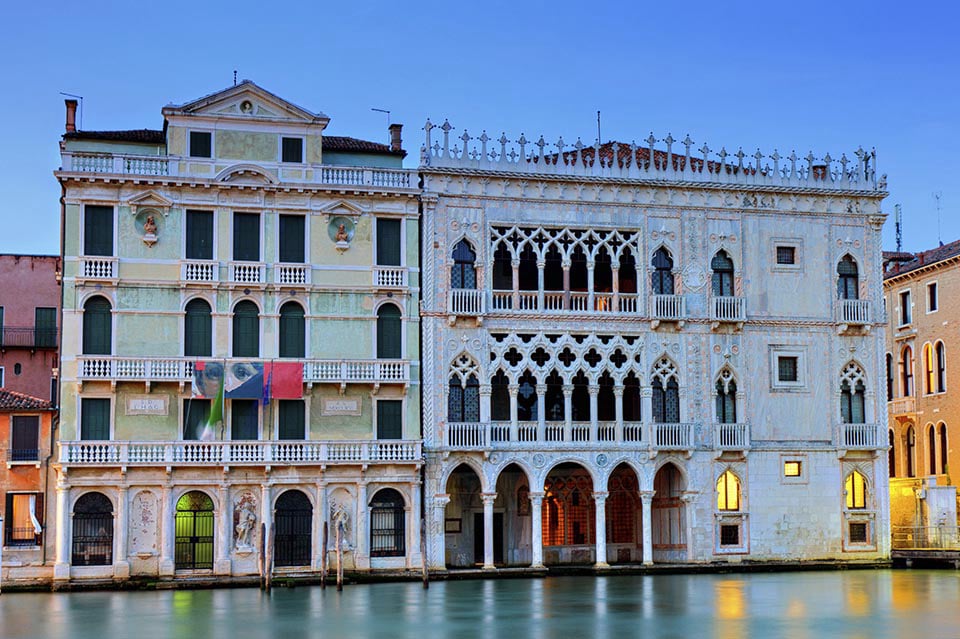
This palace, built in the first half of the fifteenth century by the wealthy merchant Marino Contarini, blends Byzantine and Venetian Gothic styles and recalls the residence of the Doges. It has three storeys, an architectural layout very common in Venice. The façade, created in 1430 by Giovanni and Bartolomeo Bon, father and son, was originally covered with gold, which gave the palace its name. Particularly striking is the floor mosaic, which imitates the pavements of early Christian basilicas. The wellhead, carved by Bartolomeo Bon in the fifteenth century, had to be repurchased from an antiquarian in order to be returned to its original place.
Today the palace is home to the Giorgio Franchetti Gallery. Baron Franchetti acquired the building in 1895 and donated it to the Italian State in 1916 together with his art collection.
Among the highlights of the Franchetti Gallery are the famous Saint Sebastian by Andrea Mantegna and frescoes by Giorgione and Titian originally created for the Fondaco dei Tedeschi. The collection also includes paintings by non-Italian artists, among them Van Eyck and other representatives of the seventeenth-century Dutch school.
CA’ VENDRAMIN CALERGI
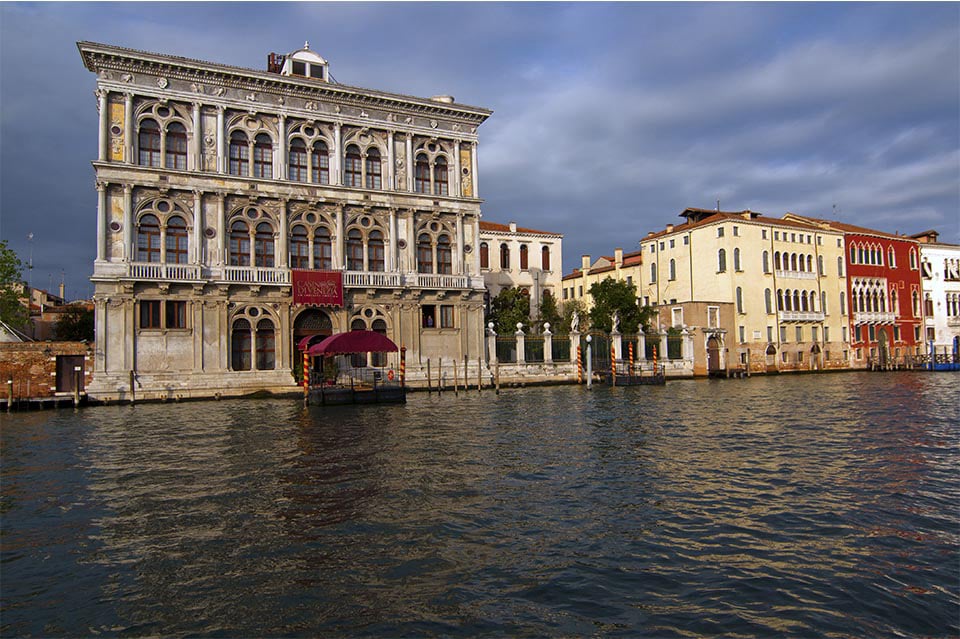
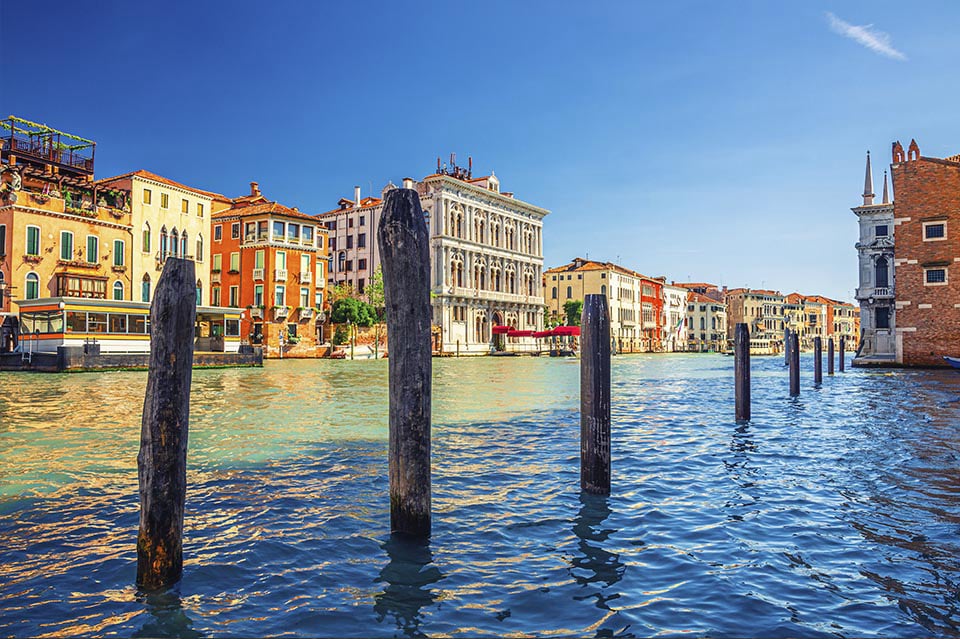
The Loredan family commissioned Mauro Codussi to build this palace, whose white marble façade overlooks the Grand Canal. Today this Renaissance building houses the Venice Casino and the Wagner Museum, as the famous German composer once lived here and died in the palace in 1883.
CHURCH OF THE MADONNA DELL’ORTO
The original fourteenth-century church, built in Venetian Gothic style, was remodelled a hundred years later. The church was initially dedicated to Saint Christopher, but a miraculous image of the Virgin and Child discovered in a nearby orchard gave it its present name.
The simple terracotta façade is divided into three sections corresponding to the three naves inside. Highlights include the Renaissance Valier Chapel, with The Madonna by Giovanni Bellini, and the Contarini Chapel, which houses the altarpiece of Saint John the Baptist by Giambattista Cima da Conegliano. The bell tower, dating from the early sixteenth century, is crowned by a distinctive onion-shaped dome designed by the Bon family.
The church is closely associated with the painter Jacopo Tintoretto, who lived nearby and is buried here. He created many works for its decoration, including Saint Agnes, The Presentation of the Virgin, The Adoration of the Golden Calf, and The Last Judgement.
CASTELLO
Castello is the largest, liveliest and most traditional sestiere of Venice, and the only one that does not border the Grand Canal. It contains two major green spaces: the Giardini Pubblici, created by order of Napoleon and today largely occupied by the Biennale, and the pine grove of Santa Elena, also known as the Parco della Rimembranza.
The district of Castello was one of the first inhabited areas of the city. For this reason, the Basilica of San Pietro di Castello served as the patriarchal seat—the city’s main religious centre—until 1807, when Napoleon transferred it to St Mark’s. The Arsenal, built in the twelfth century to construct Venice’s powerful fleet, divides the district into two parts.
The Riva degli Schiavoni marks the southern boundary of Castello. It is a broad waterfront promenade that begins behind the Doge’s Palace and stretches as far as the Giardini Pubblici.
ARSENAL AND THE NAVAL HISTORY MUSEUM
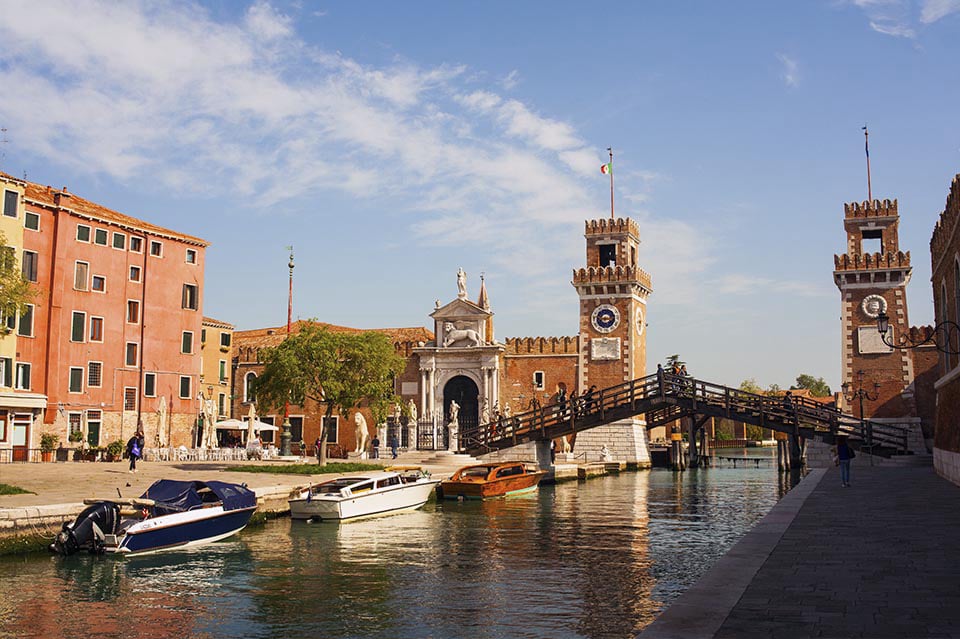
The Arsenal, a symbol of the military power of the Republic of Venice, stands at the eastern end of the city in a strategic position for controlling the lagoon. The complex covers more than forty hectares and is surrounded by walls and canals. Although it has been restored, it remains a military facility and access is restricted.
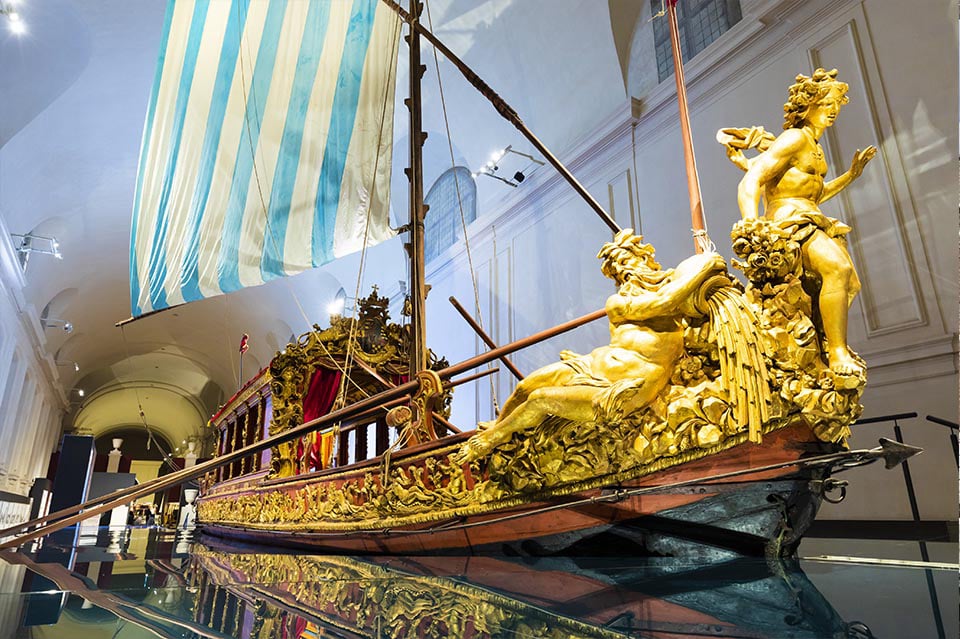
A vaporetto passes along the internal canal, allowing visitors to see some of the buildings, including the one that once housed the Bucintoro, the ceremonial galley in which the Doge sailed out on Ascension Day during the Festa della Sensa. During this ceremony, the Doge threw a ring into the water, symbolising the marriage of the city with the sea.
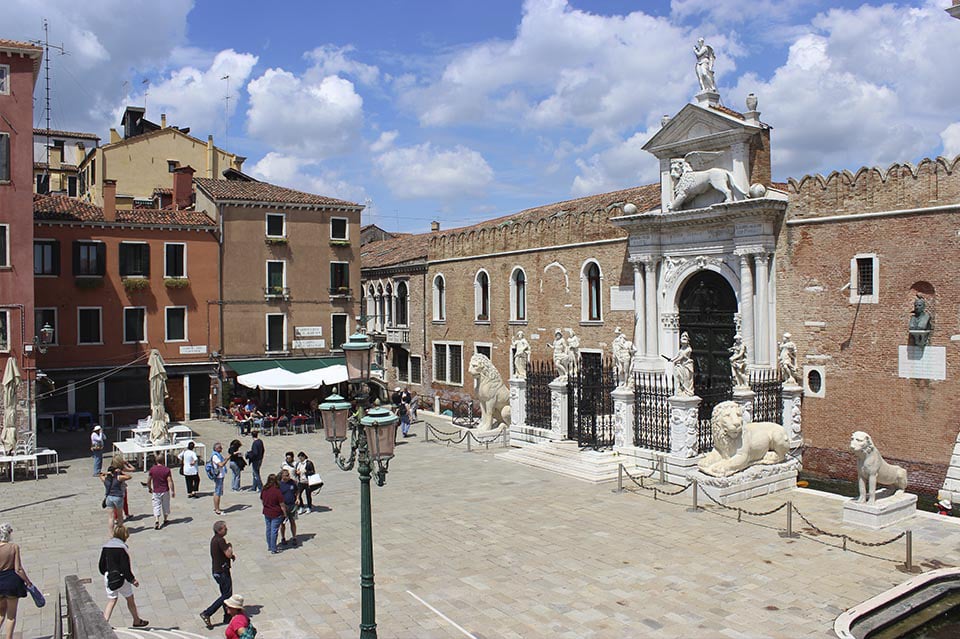
The triumphal arch of the Renaissance entrance is crowned by the Lion of Saint Mark. Ships once passed beneath the Arsenal bridge, which could be raised, to enter the Arsenale Vecchio. The Arsenale Nuovo was built between the fourteenth and fifteenth centuries.
The Naval History Museum, built on the site of a former granary in Campo San Biagio, occupies a fifteenth-century building with five floors and forty-two rooms. Inside are trophies, ship models and full-sized fishing boats.
In 1577 it temporarily hosted the Maggior Consiglio, the main governing body of the city, after a fire forced the council to leave the Doge’s Palace.
GIARDINI PUBBLICI AND THE BIENNALE
The gardens were created at the initiative of Napoleon, who ordered the demolition of several religious buildings and the filling in of the canal formed by the Rio di Castello. This transformation also led to the creation of Via Garibaldi, the widest avenue in Venice, which connects the district with the island of San Pietro.
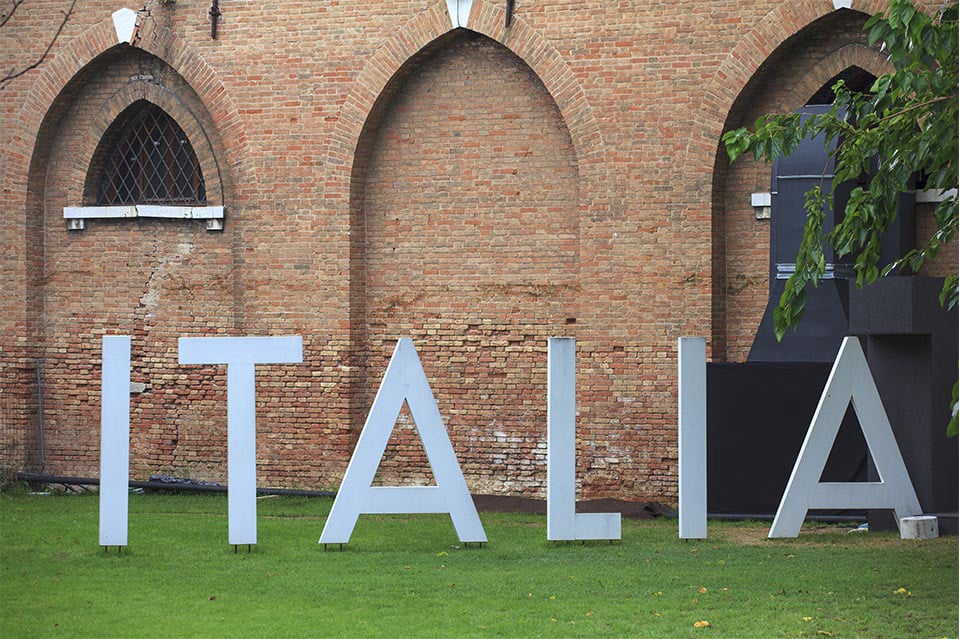
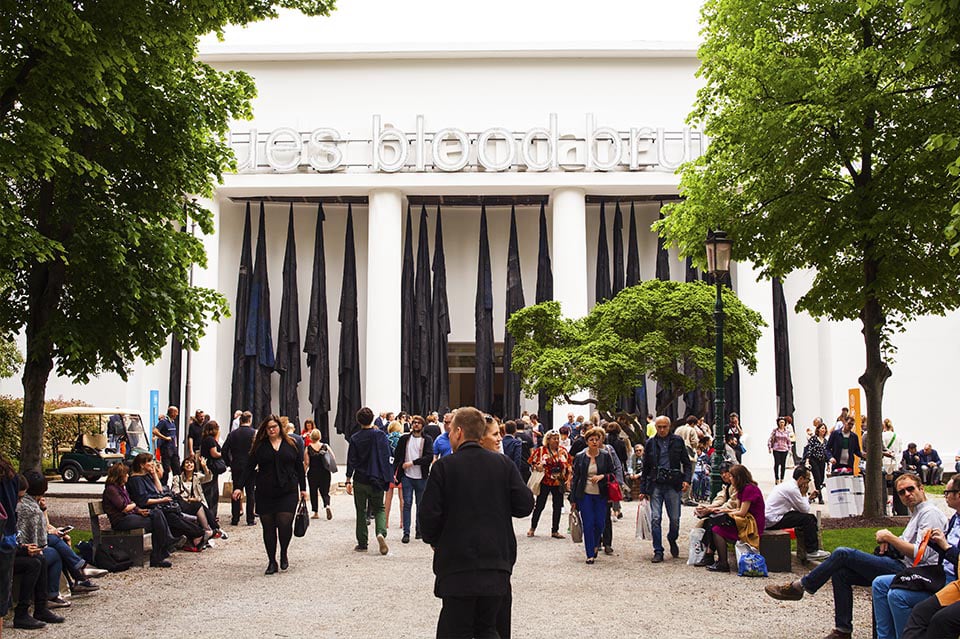
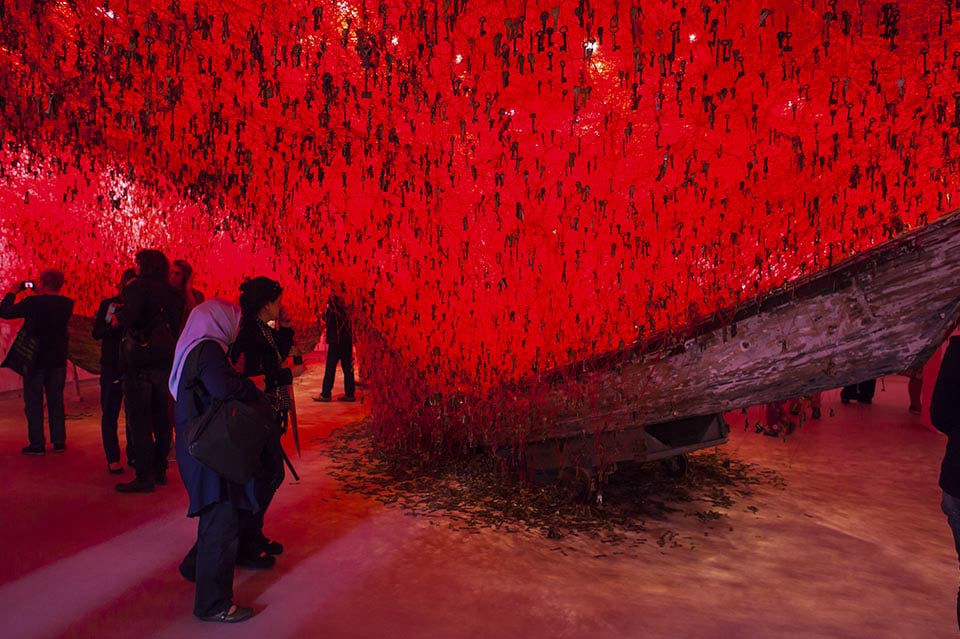
The Venice Biennale was founded in 1895 and, despite its name, is not held every two years. In odd-numbered years the exhibition is devoted to art and takes place between June and October. In even-numbered years, between September and November, the event focuses on architecture.
From the nineteenth century onwards the Biennale has been held in the eastern part of the gardens, in a building originally designed for concerts. Since 1907 participating countries have built their own national pavilions, which today number around thirty.
CHURCH OF SANTA MARIA FORMOSA
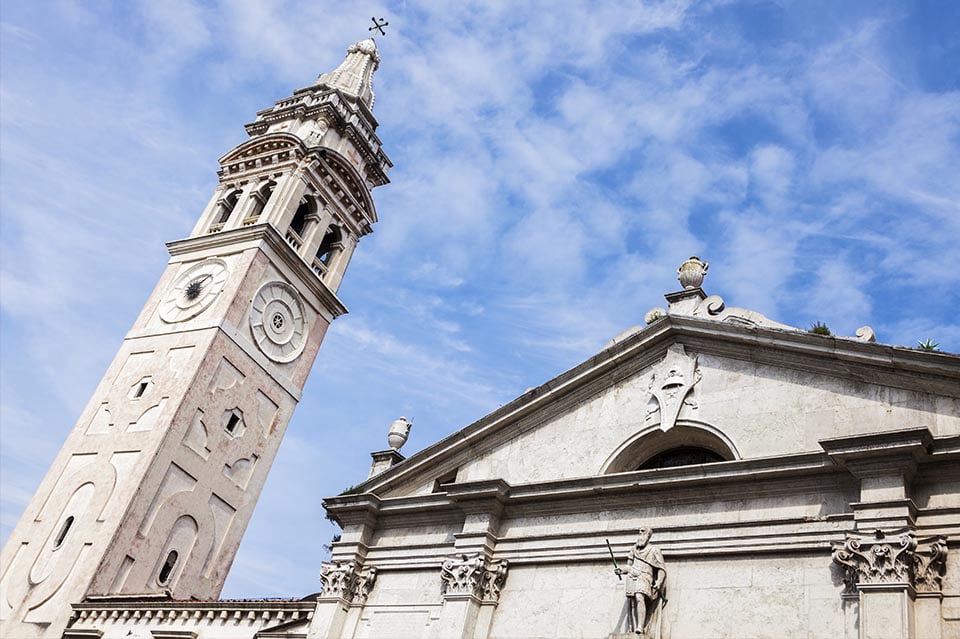
Located in the square of the same name and surrounded by palaces of various architectural styles, the church takes its name from a legend according to which Bishop Saint Magnus saw a vision of an especially beautiful image of the Virgin—formosa in Latin—from which the place derives its name.
The present church was built at the end of the fifteenth century by Mauro Codussi on the site of an earlier twelfth-century structure. It has a Latin cross plan and a bell tower added at a later date. Among the works preserved here are The Martyrdom of Saint Barbara by Palma the Elder, The Virgin and Child with Saint Dominic by Giambattista Tiepolo, and the triptych of Our Lady of Mercy by Bartolomeo Vivarini.
GRIMANI PALACE
Originally the residence of the Grimani family, the building was renovated during the Cinquecento and richly decorated with frescoes, marble and stucco. A monumental staircase designed by Federico Zuccari leads to the first floor. There you will find the Cabinets of Callisto and Apollo, adorned with stuccoes by Giovanni da Udine and frescoes by Francesco Salviati, as well as the dining hall, which still preserves its original floors and magnificent fireplaces.
The Tribune was built to display most of the 130 marble sculptures of Greek and Roman origin belonging to the family’s collection. These works were donated to the city by Cardinal Giovanni Grimani and are now divided between the Archaeological Museum and the Marciana Library.
BURANO
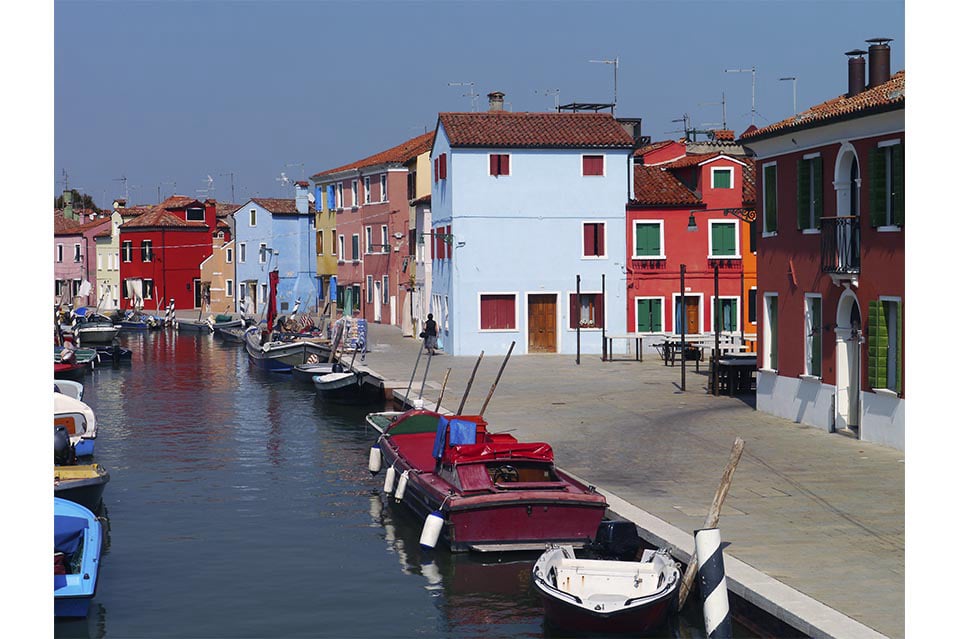
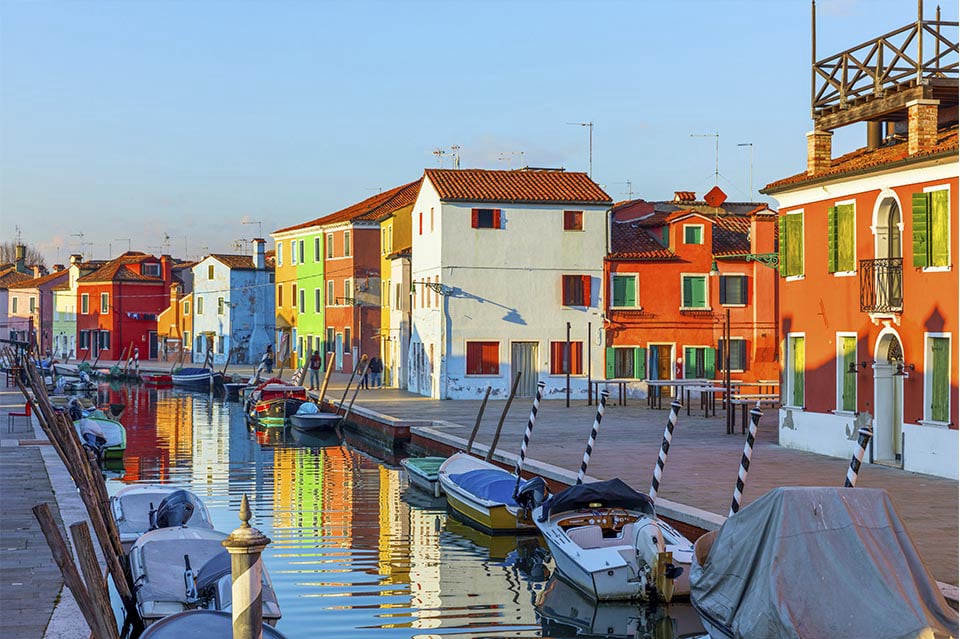
This island lies about eight kilometres northeast of Venice, roughly a forty-minute vaporetto ride from Cannaregio, and is instantly recognisable for its brightly coloured houses. According to tradition, the fishermen painted them in vivid colours so they could easily spot their homes from their boats when returning from fishing.
In the sixteenth century the art of lace-making flourished here, encouraged by Elisabetta Morosini, the wife of the Doge. Burano lace became so famous worldwide that King Louis XIV banned its importation into France and established a domestic industry to imitate it. In the nineteenth century several lace schools were founded on the island to revive the craft. This tradition is now celebrated in the Lace Museum, located in the Palazzo del Podestà.
The main square honours the musician Baldassare Galuppi with a museum dedicated to his life and work. It is also home to the Church of San Martino, which houses The Crucifixion, an early work by Giambattista Tiepolo dated 1725.
MURANO
Also known as the Island of Light, Murano is the closest island to Venice and has a very similar urban layout. Its period of prosperity began in the thirteenth century, when it gained a certain degree of independence from the Republic. During the fifteenth and sixteenth centuries nobles and wealthy merchants built their palaces on the island.
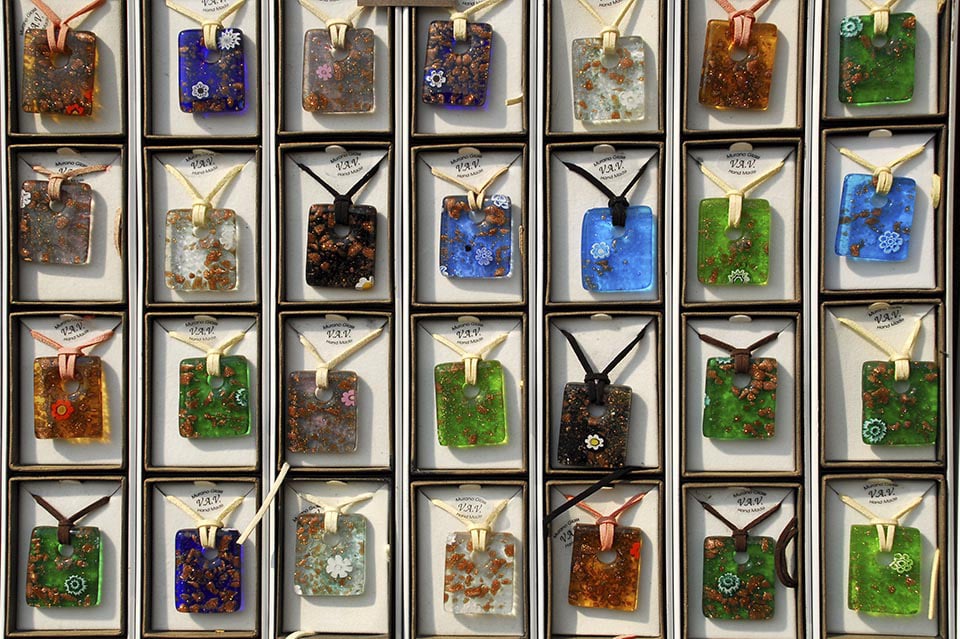
Glassmakers had already been working in Venice since the tenth century, but because their furnaces posed a fire risk in a city largely built of wood, they were moved to Murano in the thirteenth century. These master glassblowers enjoyed the privilege of marrying into the nobility, but they were forbidden to leave Venice to prevent their techniques from being copied elsewhere.
The Glass Museum, founded in 1861, is located in the Palazzo Giustiniani and explains how these families of artisans worked.
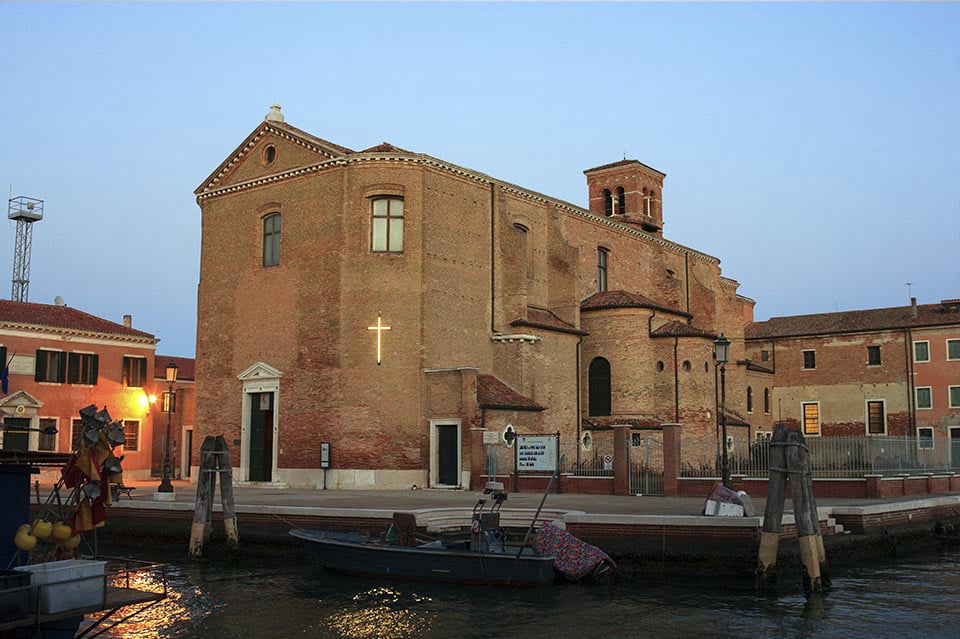
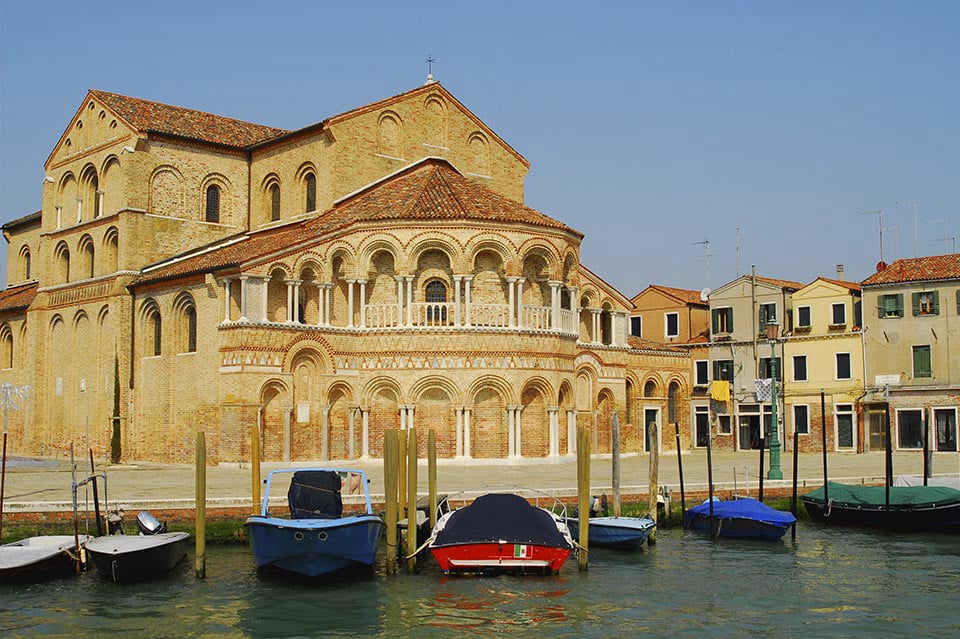
The Basilica of Santi Maria e Donato, built in Romanesque-Byzantine style on the site of an earlier church, presents a striking contrast: the apse facing the canal is richly decorated with its golden mosaic of the Virgin, while the façade facing the interior square of the island is much more austere.
Behind the altar are preserved the bones of a dragon which, according to legend, was slain by Saint Donatus. The floor retains a beautiful twelfth-century mosaic, and the Romanesque bell tower is also noteworthy.
The Church of San Pietro Martire rewards visitors with paintings by great Venetian masters such as Jacopo and Domenico Tintoretto, Giovanni Bellini, Paolo Veronese and Bartolomeo Vivarini.
SAN GIORGIO MAGGIORE
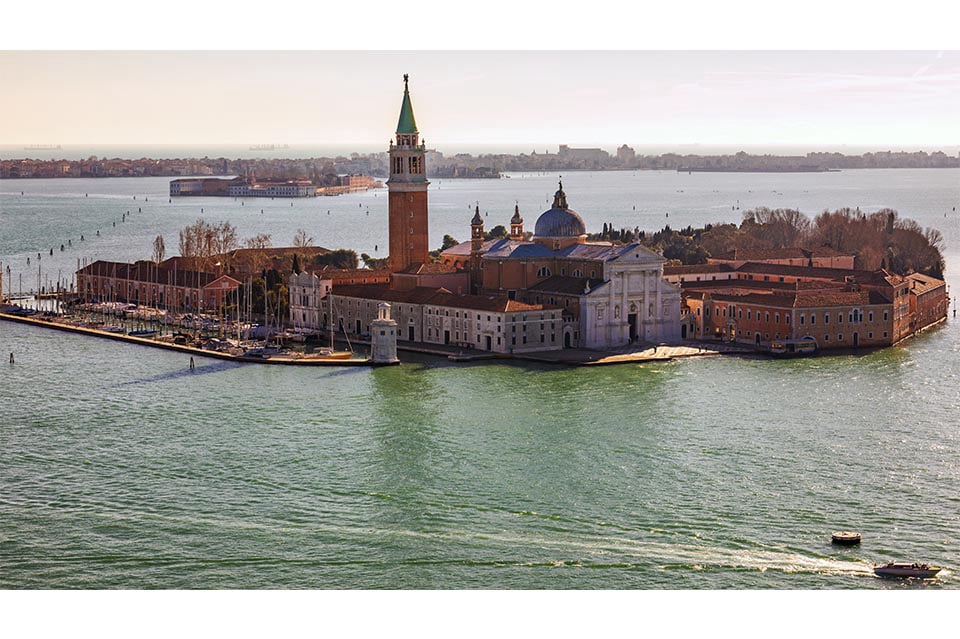
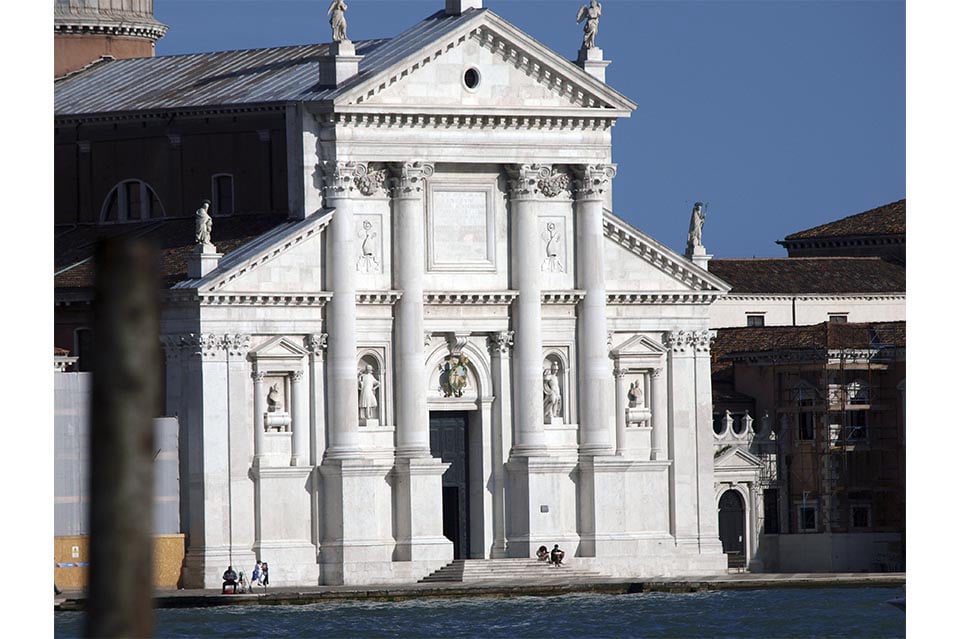
This island belongs to the sestiere of San Marco, from which it is separated by the waters of the Giudecca Canal. The Church of San Giorgio Maggiore stands here, completed in 1610. Its façade of white Istrian stone, designed by Andrea Palladio, seems to rise directly from the water.
To resolve the difference in height between the central nave and the side aisles, Palladio used the technique of superimposing two classical temple fronts: a triangular pediment crowning the central nave and half pediments above the side aisles. Four giant columns set on pedestals and two niches containing statues of Saint George and Saint Stephen decorate the façade.
The bell tower, also crowned with Istrian stone, rises to 60 metres and offers magnificent views over Venice and its lagoon.
Inside, the church has a central nave and two side aisles and is bright thanks to its large windows. Two late works by Tintoretto, The Gathering of the Manna and The Last Supper, flank the altar.
Behind the church stands the ancient monastery, originally founded in the tenth century and rebuilt in the thirteenth. It houses the remarkable library designed by Baldassare Longhena, with more than one hundred thousand volumes. The monastery once welcomed pilgrims returning from the Holy Land and visiting dignitaries of the Republic. Every 26 December it received a ceremonial visit from the Doge and his entourage. Today the complex is managed by the Cini Foundation.
The labyrinth garden and the Cloister of the Cypresses are also well worth visiting.
THE LIDO
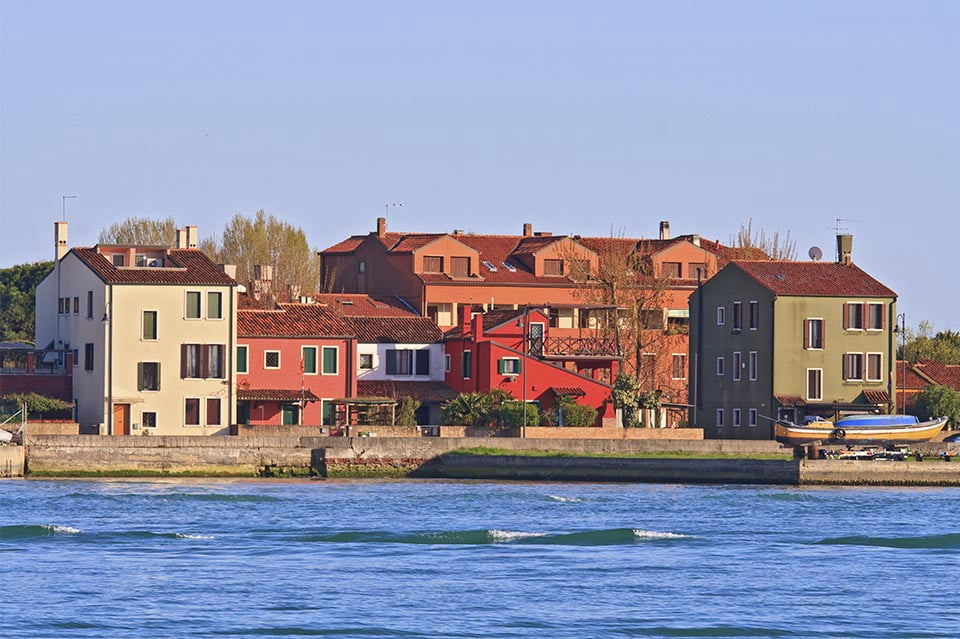
This island, located about 1.5 kilometres from Venice—around fifteen minutes by boat—forms a natural barrier between the lagoon and the open sea. Much of its 12 kilometres in length and up to 4 kilometres in width is occupied by beaches, most of them private, facing the Adriatic.
At the northeastern tip stands the Fort of Saint Nicholas, which once defended the entrance to the port of the Lido and, by extension, the city of Venice.
At the end of August, for two weeks, the Lido hosts the Venice Film Festival, known as the Mostra. Before the construction of its current headquarters in 1936, the festival was held at the Hotel Excelsior.
The Grand Hotel des Bains, also located along the Lungomare Guglielmo Marconi, was used by Luchino Visconti as a filming location for his adaptation of Thomas Mann’s famous novel Death in Venice.
On the island of Pellestrina, a narrow strip of land south of the Lido, the geographer Vincenzo Coronelli designed a system of sea walls in the eighteenth century. Built with large blocks of white Istrian stone, they are known as the murazzi. Pellestrina is the furthest inhabited island from Venice.
GIUDECCA
This island, located opposite the sestiere of Dorsoduro, was also known as spina longa because of its elongated shape. An important trial—giudicato means “judgement” in Italian—held in the ninth century condemned several noble families to exile on the island, where they were granted land.
In the sixteenth century Giudecca became the preferred destination for the city’s elite, who built their second homes there amid green surroundings. In the nineteenth century, however, it developed a powerful military industry with large factories. Today, many of these buildings, now disused, are being converted into studios for Venetian artists.
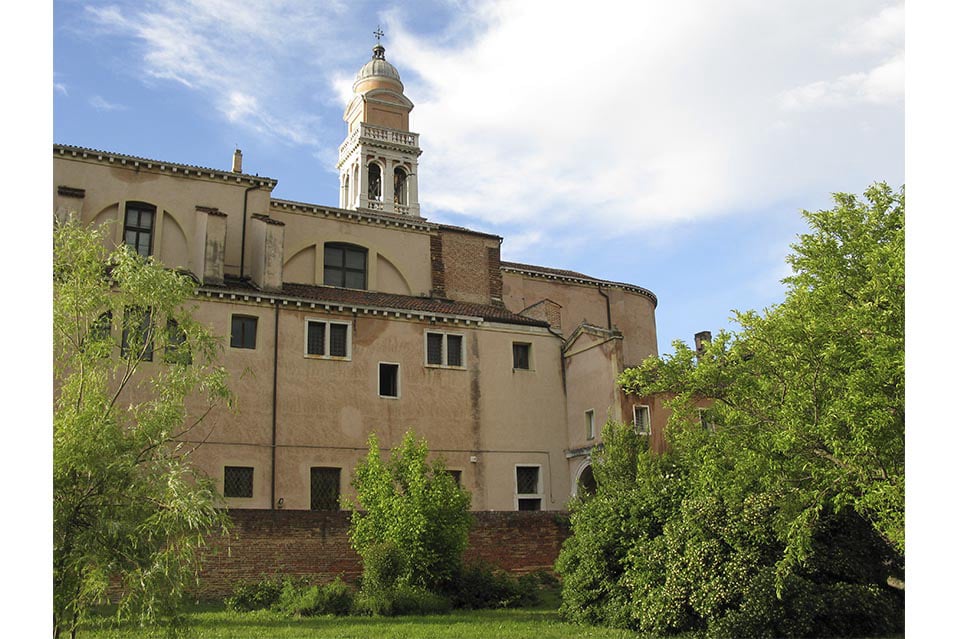
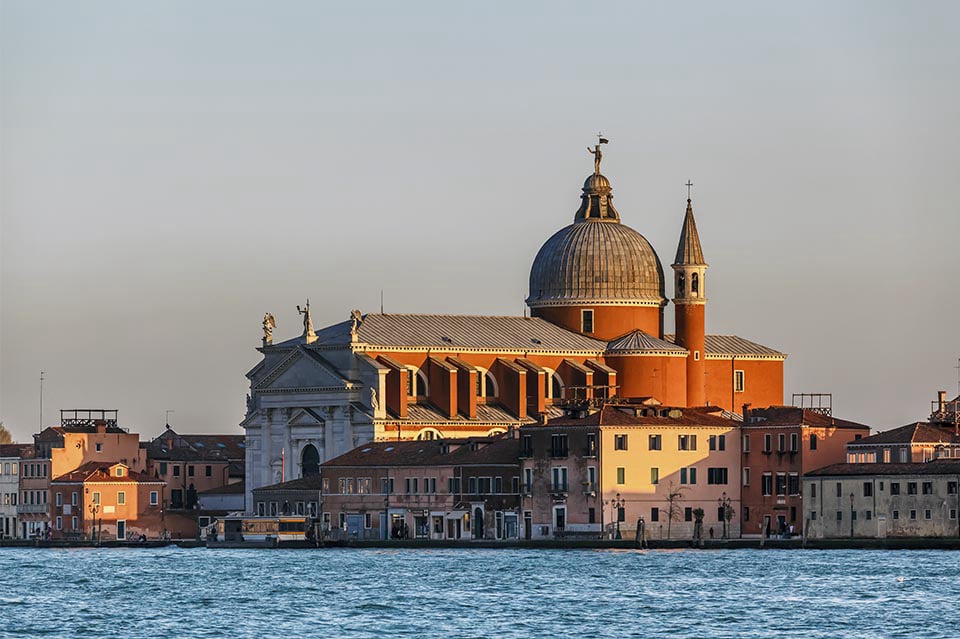
The Church of the Redentore was begun by Andrea Palladio in 1577 as an expression of gratitude for the end of a devastating plague epidemic and was completed by Antonio da Ponte in 1592. It shares many similarities with San Giorgio Maggiore, as both buildings share the same architect. Among these similarities are the façade composed of two superimposed classical temple fronts and the position of the dome near the entrance, which gives greater depth to the choir.
Every year, on the third Saturday of July, the Festa del Redentore is celebrated with a pilgrimage by the faithful from the Zattere, on the opposite shore of the Giudecca Canal, to the church, crossing a temporary bridge made of boats.

Audio guide devices, Multimedia audio guides,
Audio guide GPS tourist bus-train, charging bases and accessories.

Group guidance systems, headsets, charging cases, tour guide systems accessories.
Audioguides available from mobile devices, web App, downloadable App from Google Store.

Audioguides in several languages, translations, voiceovers. Audio descriptions, signoguides, visual contents for audioguides. 3D Reality.

Calle Penelope 5 - 28042 Madrid (Spain)
Eichborndamm 167 G55, D-13403 Berlin (Germany)
117 Avenue Victor Hugo - 92100 Boulogne (France)
Piazza Teresa Noce 17D - 10155 Turin (Italy)
© Copyright 2006 - Call&Talk